Tampilkan postingan dengan label Kapal Pemburu Ranjau. Tampilkan semua postingan

14 Oktober 2026

Exail Memulai Produksi Sistem MCM Nirawak untuk TNI AL

14 Oktober 2026

Exail Inspector 90 USV (photo: Exail)

Exail telah memulai produksi *Unmanned Mine Countermeasures Integrated System* (UMIS) yang dipesan oleh Indonesia, sembari bersiap mengintegrasikan sistem sonar tarik (*towed sonar*) dan sistem penyapu ranjau tipe *influence* (*influence sweep*) dari pihak ketiga yang telah dipilih oleh negara tersebut.

Berbicara kepada *Naval News* dalam rangkaian tur pers EURONAVAL 2026, Mine Warfare Director Exail, David Barre, mengatakan bahwa produksi telah dimulai untuk paket UMIS yang diumumkan pada Juni 2025.

Paket tersebut mencakup empat kapal permukaan nirawak (*Unmanned Surface Vessel* atau USV) Inspector 90, serta ROV identifikasi ranjau Seascan dan sistem pemusnah ranjau sekali pakai (*expendable*) K-Ster.

UMIS ini akan dioperasikan dari dua kapal penyapu ranjau (*Mine Countermeasures Vessel* atau MCMV) milik TNI AL, yaitu KRI Pulau Fani (731) dan KRI Pulau Fanildo (732), yang dibangun oleh Abeking & Rasmussen.

Exail menyatakan bahwa sistem-sistem tersebut dapat diproduksi dalam waktu yang relatif singkat. Sebagai contoh, perusahaan tersebut mampu memproduksi dua sistem K-Ster per hari. Exail juga sedang meningkatkan kapasitas produksinya, termasuk melalui fasilitas baru yang akan segera mulai dibangun di Prancis bagian selatan.

Henriksen HEMLIS beroperasi bersama Exail Inspector 90 (image: Henriksen)

Selain itu, perusahaan mengonfirmasi bahwa Indonesia telah memilih sistem sonar tarik dan sistem penyapu ranjau *influence* dari pemasok Eropa yang sebelumnya pernah bekerja sama dengan Exail. Exail akan mengintegrasikan sistem-sistem tersebut ke dalam paket UMIS serta menyediakan sistem peluncuran dan pemulihan (*launch and recovery*) yang terkait.

Awal tahun ini, perusahaan asal Norwegia, Henriksen, mengumumkan akan memasok sistem *Henriksen Multi Lightweight Influence Sweep* (HEMLIS) kepada TNI AL; ini menandai penjualan komersial pertama sistem tersebut di luar Eropa. HEMLIS akan diintegrasikan dengan USV Inspector 90.

Exail menyatakan bahwa kontrak dengan Indonesia tersebut sudah mencakup pekerjaan integrasi untuk kedua sistem pihak ketiga itu, serta pelatihan bagi personel Indonesia. Pelatihan akan dilaksanakan baik di Prancis maupun di Indonesia.

Perusahaan juga menyatakan harapan akan adanya peluang bisnis lebih lanjut dari Indonesia, termasuk kemungkinan pesanan untuk sistem baru tambahan serta peningkatan (*upgrade*) pada peralatan atau platform peperangan ranjau milik TNI AL yang sudah ada saat ini. 

06 Agustus 2026

Singapura Memperkuat Kemampuan Peperangan Ranjau dengan AUV COMET-MCM Buatan Prancis

06 Agustus 2026

Kendaraan bawah air otonom/ autonomous underwater vehicles (AUV) RTsys COMET-MCM (photos: RTsys)

Republic of Singapore Navy (RSN) telah mengerahkan kendaraan bawah air otonom/ autonomous underwater vehicles (AUV) COMET-MCM buatan RTsys Underwater Technologies untuk meningkatkan kemampuan penanggulangan ranjau. Langkah ini menandai tonggak penting dalam upaya modernisasi angkatan laut tersebut serta adopsi operasional sistem yang dikembangkan di Prancis ini.

Dikembangkan oleh RTsys yang berbasis di Prancis bekerja sama dengan Defence Science and Technology Agency (DSTA) Singapura, COMET-MCM dirancang untuk mendeteksi, melokalisasi, dan mengidentifikasi ranjau laut secara otonom dengan presisi tinggi pada tahap awal operasi penanggulangan ranjau.


Pengerahan ini sangat signifikan mengingat pentingnya posisi strategis Selat Singapura—salah satu koridor maritim tersibuk di dunia—yang dilalui oleh sekitar 150.000 kapal setiap tahunnya. Gangguan apa pun yang disebabkan oleh ancaman bawah air, termasuk ranjau laut, dapat berdampak serius terhadap perdagangan regional maupun global.

Dilengkapi dengan sonar *side-scan* beresolusi tinggi, COMET-MCM mampu beroperasi secara otonom selama lebih dari 12 jam untuk memetakan area bawah air yang luas dengan akurasi posisi yang tinggi. Misi diprogram sebelumnya sebelum peluncuran, sehingga memungkinkan AUV melakukan pengintaian sekaligus mengurangi beban kerja operator dan meminimalkan risiko paparan personel terhadap lingkungan berbahaya.


Menurut RTsys, data yang dikumpulkan oleh COMET-MCM diintegrasikan ke dalam arsitektur penanggulangan ranjau Angkatan Laut Singapura yang lebih luas, melengkapi informasi yang diperoleh dari sistem sonar di kapal pemburu ranjau (*minehunter*). Data yang terkumpul mendukung seluruh rangkaian operasi peperangan ranjau, mulai dari deteksi, klasifikasi, identifikasi, hingga netralisasi.

Ketika kontak yang mencurigakan terdeteksi, objek tersebut dapat diselidiki lebih lanjut menggunakan sistem yang dioperasikan dari jarak jauh atau oleh penyelam yang dilengkapi dengan sonar genggam khusus, termasuk sistem SONADIVE buatan RTsys.

Program ini dikembangkan melalui kerja sama erat antara Angkatan Laut Republik Singapura, DSTA, dan RTsys. DSTA mengelola integrasi sistem agar memenuhi kebutuhan operasional angkatan laut, sementara RTsys berkontribusi dengan keahliannya di bidang robotika bawah air otonom dan teknologi akustik.


Wahana COMET-MCM diproduksi di fasilitas RTsys di Lanester, Brittany, dan telah menjalani serangkaian uji operasional yang ekstensif untuk memvalidasi kinerjanya. Menurut perusahaan tersebut, sistem ini mampu mengirimkan data pelacakan secara *real-time* kepada operator di permukaan, sehingga meningkatkan kesadaran situasional dan kemampuan pengambilan keputusan selama misi berlangsung. 

“COMET-MCM merupakan hasil kerja sama selama lebih dari satu dekade dengan berbagai angkatan laut di seluruh dunia. Pengerahan operasionalnya oleh Angkatan Laut Republik Singapura menjadi bukti lebih lanjut atas keahlian kami di bidang robotika bawah air dan akustik. Hal ini menunjukkan kemampuan kami dalam memenuhi standar ketat angkatan laut paling maju di dunia guna mengatasi tantangan dalam peperangan ranjau,” ujar Pierre-Alexandre Caux, Direktur Penjualan di RTsys Underwater Technologies.


Angkatan Laut Republik Singapura menyoroti pentingnya kemampuan ini dalam mengamankan salah satu jalur pelayaran paling krusial di dunia.

“Selat Singapura merupakan jalur vital bagi perdagangan global. Dengan adanya COMET-MCM, kami meningkatkan kemampuan untuk mendeteksi dan mengidentifikasi ancaman bawah air dengan tingkat presisi dan efisiensi yang lebih tinggi, sekaligus menjamin keselamatan awak kami,” demikian pernyataan pihak angkatan laut.


16 Januari 2026

Henriksen Akan Memasok Sistem Penyapu Ranjau HEMLIS ke TNI AL

16 Januari 2026

Ilustrasi operasional Henriksen HEMLIS (image: Henriksen)

Perusahaan Norwegia H. Henriksen telah mengumumkan akan memasok sistem Henriksen Multi Lightweight Influence Sweep (HEMLIS) ke Angkatan Laut Indonesia (TNI AL), menandai penjualan komersial pertama sistem tersebut di luar Eropa.

Menurut perusahaan, beberapa sistem HEMLIS akan dikirim dan diintegrasikan pada kapal permukaan tak berawak (USV) yang dipasok oleh perusahaan Prancis Exail (sebelumnya dikenal sebagai ECA Group). Pengiriman ke Angkatan Laut Indonesia akan ditangani oleh PT Agrapana Nugraha Katara, yang merupakan mitra lokal yang dikenal dari pembuat kapal Jerman Abeking & Rasmussen.

H. Henriksen menyatakan bahwa HEMLIS akan menambah kemampuan penyapu ranjau tak berawak modern dan modular ke dalam perlengkapan penanggulangan ranjau/mine countermeasures (MCM) yang sudah ada di Angkatan Laut Indonesia.

Henriksen HEMLIS dan USV Exail Inspector 90 (image: Henriksen)

Sistem ini dirancang untuk operasi berawak dan tak berawak dan dapat diskalakan untuk digunakan di perairan terbatas atau sebagai bagian dari operasi gugus tugas yang lebih besar. Sistem ini menggunakan teknik penyapuan pengaruh untuk membersihkan ranjau laut dengan aman sambil mengurangi risiko bagi awak dan anjungan. HEMLIS juga telah dipasang pada kapal penyapu ranjau kelas Alta Angkatan Laut Kerajaan Norwegia.

Dalam pernyataannya, Henriksen menggunakan citra yang menyerupai USV Inspector 90 milik Exail. Hal ini sejalan dengan pengumuman Exail sendiri pada Juni 2025 bahwa mereka telah mendapatkan kontrak untuk menyediakan empat USV Inspector 90 kepada Angkatan Laut Indonesia, bersama dengan sistem Identifikasi dan Pembuangan Ranjau Seascan dan K-Ster.

Sistem-sistem ini akan dikerahkan dari kapal penanggulangan ranjau laut/mine countermeasures vessels (MCMV) sepanjang 62 meter, KRI Pulau Fani (731) dan KRI Pulau Fanildo (732), keduanya dibangun oleh Abeking & Rasmussen dan diserahkan kepada Angkatan Laut Indonesia pada tahun 2023.

USV Exail Inspector 90 (photo: Exail)

Naval News sebelumnya melaporkan bahwa meskipun Abeking & Rasmussen mengusulkan USV tipe Small Waterplane Area Twin Hull (SWATH) untuk melengkapi kedua MCMV tersebut, Inspector 90 milik Exail akhirnya dipilih karena lebih sesuai dengan persyaratan Angkatan Laut Indonesia.

Perlu dicatat, K-Ster sudah digunakan oleh beberapa angkatan laut, termasuk Angkatan Laut Kerajaan Belanda, Angkatan Laut Republik Singapura (RSN), dan Angkatan Laut Lituania. Pekan lalu, Exail juga mengumumkan bahwa mereka telah mendapatkan kontrak besar senilai €40 juta dari Badan Dukungan dan Pengadaan NATO untuk memasok beberapa ratus sistem K-Ster.

19 November 2025

RSN Begins Construction of Mine Countermeasures Unmanned Surface Vessels (MCM USV)

19 November 2025

First steel cutting ceremony for MCM USV (photo, infographic: RSN) 

Earlier today, our Chief of Navy RADM Sean Wat officiated the Plate-Cutting Ceremony for our Mine Countermeasures Unmanned Surface Vessels (MCM USVs), alongside our defence partners from ST Engineering and DSTA Defence Science and Technology Agency at ST Engineering's Gul Yard. 


This ceremony marks the first milestone in the vessel-building process for the MCM USVs, which will form part of RSN’s upgraded suite of MCM unmanned capabilities, including MCM autonomous underwater vehicles and Command and Control infrastructures.


Planned for progressive delivery from 2027 onwards, the MCM USVs, together with other upgraded MCM capabilities, will enhance our Navy’s ability to keep Singapore's sea lanes safe. These capabilities will progressively replace the Bedok-class MCM vessels.

(RSN)

31 Desember 2024

TLDM Latih Kesiapsiagaan dengan INDEX 26 MCMV

31 Desember 2024

Latihan INDEX MCMV TLDM (all photos: TLDM)

Kesiapsiagaan Skuadron Penangkis Periuk Api ke-26

Latihan Individual Exercise 26th Mine Countermeasure Vessel (INDEX 26 MCMV) 2024 telah berjaya dilaksanakan di perairan Kepulauan Sembilan dan Pulau Pangkor pada 15 dan 16 Disember 2024.


Latihan berkonsepkan Field Training Exercise (FTX) ini melibatkan aset Skuadron Penangkis Periuk Api (SPP) Ke-26 iaitu KD MAHAMIRU, KD JERAI dan KD KINABALU.


Pelaksanaan INDEX 26 MCMV bukan sahaja meningkatkan tahap kesiapsiagaan operasi Skuadron Penangkis Periuk Api (SPP) Ke-26, tetapi turut memperkukuhkan keupayaan TLDM dalam menjaga keselamatan perairan negara.


Menurut Portal Rasmi TLDM, Skuadron Penangkis Periuk Api ke-26 mempunyai armada 4 kapal yang terdiri dari KD Mahamiru - 11, KD Jerai - 12, KD Ledang -13, dan KD Kinabalu - 14.


Kapal penangkis periuk api Lerici class ini dibina oleh Syarikat Intermarine di Itali dan dilancarkan pada 30 Oktober 1984 oleh Puan Zabidahtul Mansur, isteri kepada Tuan Yang Terutama Duta Besar Malaysia.

01 April 2023

Kehebatan Kapal Pemburu Ranjau Buatan Jerman yang Bakal Didatangkan KASAL

01 April 2023

KRI Pulau Fani MCMV 731 (photos : Kriegssel)

SURYA.co.id - Inilah kehebatan kapal pemburu ranjau buatan Jerman yang bakal didatangkan KASAL Laksamana Muhammad Ali.

Kapal pemburu ranjau tersebut bakal menambah jajaran alutsista yang memperkuat TNI AL.

Kapal pemburu ranjau adalah kapal yang dirancang khusus untuk mendeteksi dan menghancurkan ranjau laut.


Ranjau laut adalah perangkat peledak yang biasanya ditanamkan di dasar laut untuk merusak kapal-kapal musuh.

Kapal pemburu ranjau dilengkapi dengan teknologi pendeteksi dan penghancur ranjau, sehingga mampu menghilangkan ancaman ranjau laut.

Kapal pemburu ranjau biasanya memiliki peralatan seperti sonar dan magnetometer untuk mendeteksi ranjau laut. 


Setelah ranjau laut terdeteksi, kapal ini dapat menggunakan robot penghancur atau alat peledak lainnya untuk menghancurkan ranjau laut tersebut.

Kapal pemburu ranjau juga dapat membawa peralatan tambahan seperti kapal selam mini dan robot pengintai untuk membantu dalam tugas penghapusan ranjau laut.

Kapal pemburu ranjau umumnya digunakan oleh angkatan laut di seluruh dunia untuk melindungi kapal-kapal mereka dari ancaman ranjau laut yang dapat menyebabkan kerusakan serius pada kapal dan mengancam keselamatan awak kapal.


Laksamana Muhammad Ali mengatakan bahwa satu kapal pemburu ranjau buatan Jerman segera datang ke Indonesia.

Rencananya, satu kapal yang akan memperkuat TNI AL itu diberangkatkan dari Jerman pada Mei 2023.


“Kalau kapal pemburu ranjau Mei baru diluncurkan dari Jerman,” ujar Ali saat ditemui di sela-sela bakti sosial korban gempa di Desa Cibulakan, Kecamatan Cugenang, Kabupaten Cianjur, pada Sabtu (18/3/2023).

Ali menyatakan bahwa Kementerian Pertahanan memesan dua kapal pemburu ranjau.

“Tapi satu dulu mungkin ya (yang datang). Nanti satu menyusul, tapi selisihnya hanya beberapa bulan,” kata Ali.


Terkait ketibaan satu kapal pemburu ranjau itu, Kepala Dinas Penerangan AL (Kadispenal) Laksamana Pertama (Laksma) Julius Widjojono mengatakan bahwa itu tergantung cuaca dan banyaknya pelabuhan singgah.

“Dulu saya pernah bawa KRI (kapal perang Republik Indonesia) dari Jerman ke Indonesia lebih kurang dua bulan,” kata Julius saat dikonfirmasi secara terpisah.

See ful article TribunNews

08 Desember 2022

Masa Depan Peperangan Ranjau Laut di Asia-Pasifik

08 Desember 2022

Kapal buru ranjau di Asia Pasifik (image : Jane's)

Ranjau merupakan senjata angkatan laut anti-akses, area-denial (A2/AD) yang paling hemat biaya. Pusat Keunggulan Perang Ranjau Angkatan Laut NATO mendefinisikan ranjau sebagai alat peledak kecil, mudah disembunyikan, dan murah yang membutuhkan perawatan minimal. Ini dapat dengan mudah diletakkan di air atau di dasar laut dari hampir semua jenis platform. Ranjau telah digunakan oleh angkatan laut baik secara defensif maupun ofensif. Mereka dapat digunakan untuk secara langsung menyerang kapal atau kapal selam musuh atau untuk melindungi kapal, kapal selam, atau area laut, pelabuhan, atau saluran air yang kritis.

Risiko medan ranjau yang dirasakan memerlukan penyebaran sarana khusus untuk mendeteksi, mengklasifikasikan, dan menetralkan ranjau – atau mengonfirmasi ketidakhadirannya – memaksakan penundaan yang tidak dapat ditolerir untuk operasi dinamis dan memberikan ranjau taktis utilitas strategis. Kemajuan dalam teknologi ranjau telah menyebabkan tindakan pencegahan terbagi menjadi dua cabang utama, penyapuan (sweeping) dan perburuan (hunting), dengan kapal penanggulangan ranjau (MCMV) dikembangkan untuk melakukan salah satu atau kedua peran tersebut.

MCMV, meskipun ukurannya relatif kecil, adalah salah satu kapal perang tercanggih yang beroperasi dengan atribut unik. MCMV menampilkan lambung plastik yang diperkuat serat nonmagnetik dan plastik yang diperkuat kaca yang memiliki redaman akustik yang tinggi, ketahanan yang sangat baik terhadap kejutan bawah air, dan sifat insulasi termal yang baik. Beberapa MCMV menggunakan campuran propulsi diesel dan listrik gabungan atau propulsi diesel bersama dengan baling-baling cycloidal untuk mengurangi ciri khasnya dan meningkatkan posisi kapal.

25 Juli 2021

RSN's USV Passed Test as MCM Role

25 Juli 2021

RSN operates two types of MCM USVs - one with the EMD system, and the other with sonar equipment (photo : DSTA)

Singapore navy's unmanned surface vessels pass test to detect and neutralise sea mines

SINGAPORE - The Republic of Singapore Navy's unmanned surface vessels (USVs) have proven their ability to neutralise sea mines, and are now mission-ready.

Using such platforms is expected to yield a significant reduction in human labour, as well as time taken to detect, and dispose of, sea mines.

The two USVs - with an expendable mine disposal (EMD) system controlled remotely from shore - successfully neutralised an underwater target on Jan 29 in waters off the Southern Islands.

Ms Siow Chengxin, a senior engineer from the Defence Science and Technology Agency (DSTA), told reporters on July 16 that the firing exercise was one of the final steps to verify that the USVs could perform well.

"It's a significant milestone validating our engineering effort on executing control of the K-STER C vehicle... wirelessly and safely," she said.

K-STER C refers to a lightweight EMD vehicle from French manufacturer ECA Group. It is loaded in a canister that is mounted on an USV.

The validation means that the USVs used for mine countermeasure (MCM) operations can now identify and neutralise underwater threats, a world-first capability.

The Republic of Singapore Navy's unmanned surface vessel used for mine countermeasure operations (photo : Sing Mindef)

Colonel Wong Chng Tong, commander of the 6th Flotilla, which leads the development of unmanned capabilities for surface and underwater craft, said the use of unmanned systems is the next frontier for maritime operations.

The deployment "enables navies to conduct operations more effectively with less manpower and at lower cost", he added in an e-mail interview.

It also reduces servicemen's exposure to threats, such as underwater explosives or improvised explosive devices, he noted.

Col Wong said sea mines laid by aggressors were the primary underwater threat that impeded safe transit in the past. The dangers have evolved to include improvised explosive devices that can be easily deployed by terrorists.

The Singapore navy began experimenting with the deployment of USVs more than a decade ago. The USVs with the EMD system were introduced in 2018, with the ability to identify but not neutralise mines.

The EMD system on manned MCM vessels needs a crew of 33, but the USV needs only two - one operator to control the vessel, and the other the EMD system console.

The manned Bedok-class MCM vessels are still in service, after completing a mid-life upgrade in 2014.

The navy operates two types of MCM USVs - one with the EMD system, and the other with sonar equipment, called the towed synthetic aperture sonar system.

K-STER C Expendable Mine Disposal Vehicle (EMD) (photo : ECA)

A third USV variant is used for coastal patrols.

These USVs can be operated remotely, either on shore or potentially on another ship.

Typically for mine countermeasure missions, a USV with the sonar system is deployed to conduct underwater scans.

Once the threat is located, another USV with the mine disposal system is activated. The EMD system is lowered into the water to close in on the threat for identification and neutralisation.

Ms Siow, 36, who is from DSTA's Naval Systems Programme Centre, said the operation of the K-STER C is almost instantaneous.

With just the press of a button, an operator can launch it from its canister, she added. On a manned MCM vessel, it takes four people about an hour to deploy the K-STER C into the water - from a storage area to an open deck, and then by a crane.

The project was not without its challenges, including those from the Covid-19 pandemic. It took four months to prepare for the live firing day, said Ms Siow, who has been with DSTA for 13 years.

"I still can recall the moment when we successfully fired off the second shot. We were all overjoyed, and felt our efforts had paid off and were worth it," she added.

11 Februari 2021

Construction of Two MCMVs for the Indonesian Navy has Begun

11 Februari 2021

New MCMV for Indonesian Navy with axe-bow wave piercing design (image : MAN)

Abeking & Rasmussen Order Complete MAN 175D Hybrid-Propulsion Packages for Indonesian Navy Minehunters

German yard, Abeking & Rasmussen, has announced that it has begun the construction of two minehunting vessels for the Indonesian Navy. Each vessel will feature a complete MAN hybrid propulsion package, with: 

-2 × MAN 12V175D-MM engines delivering 2,220 kW at 1,900 rpm
-an MAN Alpha CPP twin screw-propeller system including Alphatronic 3000 propulsion-control system for efficient and flexible maneuvering
-an AKA hybrid PTI system for silent operation while minehunting (slow speed with pure electric propulsion).

Ben Andres, Head of High-Speed Sales, MAN Energy Solutions said: “The 175D engine is ideally suited for demanding naval applications where its compactness and best-in-class fuel-oil consumption are always key criteria for customers. Delivering propulsion packages to these two minehunters also fulfills our ambition to increasingly becoming a supplier of complete solutions. This is the first time that we have worked with Abeking & Rasmussen and I look forward to further developing our relationship in the future.” 

This order adds to other 12V175D-MM engines already in operation aboard several other Indonesian Navy patrol vessels.

The new business adds to recent 175D orders that MAN Energy Solutions won late last year, including 16 units for four corvettes for the Finnish Navy; and complete propulsion packages for two OPV-45 offshore patrol vessels – featuring a total of 4 × 175D engines – that are currently under construction at Israel Shipyards in Haifa for an undisclosed African navy.

About the MAN 175D engine

MAN Energy Solutions has developed the MAN 175D engine range to supplement and complete its product portfolio in the maritime sector. In three variants of 12, 16 and 20 cylinders, the engine is available with an output ranging from 1,500 to 4,400 kilowatts and is optimised for propelling ferries, offshore supply vessels, tug boats and other working vessels. Other market areas, such as super-yachts and naval marine applications are also served by additional, specialist model versions. 

It is also an extremely eco-friendly engine, being designed from the outset with compliance to the latest, as well as future, exhaust-gas-emission requirements and utilises a very compact and flexible SCR system, which enables vessel designers to optimise space on board to the maximum.

04 Februari 2021

Australian Navy's Unmanned MCM Development Picks Up Pace

04 Februari 2021

The Steber MCM Support Boat seen at Sydney’s Pittwater area during a pilot trial in early 2020 (photo : RAN)

The Royal Australian Navy’s (RAN’s) efforts to operationalise a rapidly deployable mine-countermeasures (MCM) capability using robotic and autonomous systems under Project SEA 1778 is picking up pace with acceptance testing of key systems under way, an Australian Department of Defence (DoD) spokesperson told Janes on 20 January.

“Thales Australia, the prime systems integrator, [is] in the early stages of acceptance testing of the first of these systems,” the spokesperson said, noting that the current deployable MCM suite comprises the Atlas Elektronik Seafox expendable mine neutralisation system, General Dynamics Mission Systems’ (GDMS’s) Bluefin 9 and 12 autonomous underwater vehicles (AUVs), and the MAS Zengrange remote detonation system.

Australian glass fibre boat manufacturer Steber International earlier announced that it had won a AUD6 million (USD4.63 million) contract to supply five 38 ft (12 m)-long vessels. The vessels will have a top speed of 25 kt, a payload capacity in excess of three tonnes, and feature a new naval paint scheme. These will eventually be configured into three MCM support boats and two USVs.

“In addition, the prime systems integrator [is] trialling Steber MCM support boats, which are 12 m vessels used to deploy, operate, and recover combinations of the subsystems and Steber unmanned surface vehicles [USVs],” the spokesperson said. “These will be controlled remotely by an ECA Robotics command, control, and communication [C3] system and sweep track monitor to tow the navy’s extant Influence Mine Sweep System [IMSS].”

30 Januari 2021

Luerssen's Design of OPV Selected for New MCM & Hydrographic Vessels

30 Januari 2021

Arafura class OPV (image : Luerssen)

Henderson Shipyard becomes sovereign capability powerhouse

Australian industry is continuing to reap the benefits of the Morrison Government’s unprecedented investment in new infrastructure and shipbuilding activities which is creating thousands of Australian jobs.

Through the Morrison Government’s up to $183 billion Naval Shipbuilding Plan, Henderson shipyard in Western Australia is becoming a sovereign capability powerhouse.

Under project SEA 1905 Phase 1, Defence has made a down-select decision to explore a variant of the offshore patrol vessels for the new Mine Countermeasures and Survey Vessels under project SEA 1905 Phase 1. This will support the construction of new vessels which will be built at the Henderson precinct, supporting local jobs in Western Australia.

During a visit to the Henderson precinct, the Minister for Defence, Senator the Hon Linda Reynolds CSC commended the progress being made.

“Following the election commitment made by the Federal Government in 2019, we are bringing forward the replacement of the Huon-class vessel from the 2030’s to the mid 2020’s. We are also committed to constructing a new hydrographic capability,” Minister Reynolds said.

“These vessels will help Navy navigate more confidently throughout the region, and safely clear minefields with the use of autonomous technologies.”

Defence has released an Invitation to Register and Request for Information on Austender for various components of the mission management system, the integration of the system, and the construction of a toolbox of Robotic and Autonomous Systems that the new vessels will require.

“This is all part of the Morrison Government’s unprecedented investment in a National Naval Shipbuilding Enterprise, with Henderson being one of the two major shipbuilding hubs in Australia, along with Osborne in South Australia,” Minister Reynolds said.

Arafura class OPV (photo : Naval News)

Currently, three classes of vessels are under construction at Henderson including:

• 21 Guardian class vessels;
• 10 of the 12 Arafura class offshore patrol vessels; and
• 6 Evolved Cape class vessels.

Since the 2016 Defence White Paper, eight ships have already been built and delivered in WA, with another eight ships currently under construction at Henderson.

“With a total of up to 45 ships to be built in WA, shipbuilding has gone from zero to boom in seven years because of the Morrison Government’s significant investment. Our commitment to shipbuilding in Australia is unprecedented in its scale and ambition,” Minister Reynolds said.

The Anzac class ships are also undergoing a major midlife upgrade at Henderson. This includes upgrades to systems modernisation activities as well as quality-of-life improvements for the crew, at a cost of more than $1 billion.

“Today, around half of Australia’s surface combatant fleet and all six Collins Class submarines are home ported in WA,” Minister Reynolds said.

“With plans highlighted in the 2020 Force Structure Plan to build two multi-role sealift and replenishment ships, a Pacific Support Vessel, and an ice-rated replacement for Ocean Protector in Australia, additional major docking facilities will be required in the near future to supplement the capability of the Captain Cook Graving Dock in Sydney.

“The construction of such a facility would be an enormous boost to our sovereign shipbuilding and sustainment industry, and the West Australian Government’s forward leaning approach and commitment to this work is crucial to Defence.

“I have witnessed first-hand the hive of activity at Henderson that demonstrates the Morrison Government’s determination and commitment to creating a sovereign industrial shipbuilding capability.

“With more than 1,300 naval shipbuilding and sustainment personnel employed in WA under the Coalition Government, this is good news for business and the economy, especially as the economy recovers from COVID-19.

“As part of this Government’s Naval Shipbuilding Plan, $75 billion will be spent on Australia’s maritime capabilities over the next decade alone. This will play a crucial role in supporting Australia’s economy and jobs growth.”

01 Desember 2020

Dua Kapal MCMV Pesanan Indonesia Masuki Tahap Awal Pengerjaan

01 Desember 2020

Seremonial first steel cutting akan diselenggarakan pada Januari 2021 (photo : Kemlu)

Indonesia membeli dua unit kapal MCMV (Mine Counter-Measure Vessel) Type MHV-60 dari salah satu perusahaan Jerman Abeking & Rasmussen. Kontrak pembelian kapal dengan perusahaan yang berlokasi di Lemwerder, Bremen, Jerman ini telah ditandatangani Kementerian Pertahanan RI sejak tahun lalu. Pembelian kapal ini dimaksudkan untuk memperkuat Alutsista TNI.

Pada Kamis, 26 November 2020, batu tonggak persiapan pembuatan kapal telah dimulai. Hal tersebut ditandai dengan pemeriksaan dan pemotongan awal baja bahan baku kapal

(Milestone of Starting of Steel Cutting) yang berlangsung di Galangan kapal milik Abeking & Rasmussen. Setidaknya ada sekitar satu ton bahan pelat yang diperiksa dan dipotong pada kegiatan ini.

Karena kebijakan partial lockdown yang diterapkan di Jerman, kegiatan pada Kamis tersebut hanya dilaksanakan secara terbatas antara wakil Abeking & Remussen dan Satgas MCMV sebagai wakil Kemenhan RI.

Abeking & Remussen Frankenthal class MCMV (image : Milpower)

Usai pemeriksaan dan pemotongan baja, Tim Satgas MCMV yang dipimpin Kolonel Laut (P) Bambang Kuncoro, S.T., M.Si. bersama dengan pihak Abekin & Remussen menandatangani

sertifikat Protocol of Achieved Milestone dan Certificate of Starting of Steel Cutting.  Selain Satgas MCMV, acara ini juga dihadiri oleh Mr. Ilia Ivenitski selaku Senior Project Manager, Mr. Thomas Horn selaku Production Manager, dan Mr. Nils Olschner selaku Sales Director Spesial Ship. Di samping itu, juga hadir dari pihak Badan Klasifikasi DNV-GL yang diwakili oleh Mr. Marco Lochner selaku Project Manager Field NAVY - Submarines & Surface Vessel, Newbuilding Team North dan Mr. Henning Lanz Dipl. selaku Principal Surveyor, Region West Europe - Area Germany Newbuilding.

Kegiatan Milestone of Starting of Steel Cutting ini dilaksanakan sebagai persiapan dan pendahuluan dari acara Seremonial Pemotongan Pertama Baja Kapal, First Steel Cutting Ceremony yang menurut rencana akan digelar pada Januari 2021 mendatang.

(Kemlu)

16 November 2020

KRI Pulau Rupat-712 Laksanakan Uji Fungsi Sonar

16 November 2020

KRI Pulau Rupat kapal buru ranjau (photo : Indoalutsitajaya)

Guna mempertahankan kemampuan Sonar Buru Ranjau Triparte Class yang dimiliki TNI AL, KRI Pulau Rupat-712 dari Satuan Kapal Ranjau (Satran)  Koarmada II, melaksanakan uji kemampuan deteksi dan klasifikasi terhadap kontak bawah air, bertempat di Dermaga Surabaya Jumat (13/11).

Latihan yang dilaksanakan dengan metode Conning Run Prosedure, bertujuan melatih pengawak sonar dan tim Deck Party dalam melaksanakan marking terhadap sebuah obyek bawah laut sekaligus untuk mengetahui Minelike Echo yang diterima sonar.

Kegiatan yang disaksikan oleh Komandan KRI Pulau Rupat-712 Letkol Laut (P) Ferry Kurniawan dan staf Dislaikmatal Letkol Laut (T) Hasan, serta Dissenlekal Letkol Laut (E) Irfan Suri ini, juga untuk melatih operator sonar pemburuan ranjau hingga jarak terjauh, sehingga mampu menangkap sebuah obyek bawah laut.

”Uji fungsi ini diharapkan mampu mempertahankan fungsi asasi kapal buru ranjau, dan meningkatkan profesionalisme prajurit sekaligus kaderisasi terhadap prajurit Satran Koarmada II dalam bidang peperangan ranjau khususnya Pemburuan Ranjau,” terang Letkol Ferry Kurniawan.

Menurutnya uji fungsi ini juga sesuai dengan arahan Pangkoarmada II Laksda TNI I N.G. Sudihartawan untuk terus meningkatkan kemampuan prajurit, dan meningkatkan kondisi teknis KRI juga menindaklanjuti program prioritas Kasal Laksamana TNI Yudo Margono di bidang Modernisasi KRI, Pesud dan Matpur menuju kekuatan yang siap dioperasikan (ORF).

(KoArmada2)

17 September 2020

Sonardyne’s Solstice MCM Sonar Now MINTACS Compatible for Royal Australian Navy

17 September 2020

Mine Warfare Tactical Command (MINTAC) Software (photo : Sonardyne)

Marine technology company Sonardyne has announced that its Solstice multi-aperture sonar has been integrated into mine warfare command software used by the Royal Australian Navy (RAN).

Through a collaboration with Australian defence software engineering company Solutions from Silicon (SfS), data collected by Solstice during mine counter measure (MCM) missions can now be imported, processed and displayed in the most recent release of the MINTACs (Mine Warfare Tactical Command Software) which is in service with the RAN.

Sonardyne’s Solstice is widely considered a force multiplier for MCM operations, enabling substantially higher area coverage rates (ACR) using low-cost, low-logistics autonomous underwater vehicles (AUVs). It provides 200 m wide swath with an unrivalled 0.15° along-track resolution and consumes just 18 Watts, maximising vehicle endurance.

Bluefin 9 and Bluefin 12 UUV (photo : Bluefin)

Solstice is now fitted, as standard, to General Dynamics Mission Systems’ Bluefin-9 and Bluefin-12 unmanned underwater vehicles (UUVs). Seven Bluefin-9 and Bluefin-12s will join the RAN’s UUV fleet this year under its SEA 1778 program. They will be based at HMAS Waterhen in Sydney and will search for, classify and identify sea mines.

MINTACS provides the operator with the ability to not only read and display the Solstice data but also mark mine-like objects (MLOs) of interest and process the images with its powerful onboard automatic target recognition (ATR) capability. MINTACS is in service with host of countries around the world including the national navies of the UK, Australia, Malaysia, United Arab Emirates, New Zealand and Sweden.

(Sonardyne)

14 September 2020

Largest Minesweeper in Vietnam Upgraded with Robot

14 September 2020

Upgraded minesweeper HQ 851 or HQ 852 of the Vietnamese Navy (all photos : KienThuc)

After a long time of use, recently the 851 and 852 minesweeper of the Vietnam People's Navy have been modernized, equipped with modern robotic systems, increasing the ability to clear mines, seaport protection.

In the article "Deputy Captain who is passionate about scientific research", the Navy Information Newspaper, ship 852, Squadron 314, Brigade 161, Navy Region 3 has been upgraded with modern technology integration into year 2016. 

Ship 852 was one of two minesweepers (torpedo boat if using Sino-Vietnamese word) that was supported by the Soviet Union in 1980 and 1981. In which the 852 was transferred in June 1981, which had the old name MT-221, entered into the Soviet Navy on August 31, 1970. The other, bearing version 851, was delivered in 1980 and was formerly known as Mina, on the service of the Soviet Navy on December 31, 1970.

The two ships were built under the 266 Rubin minesweeper project with the hull made of steel with very low magnetism. The ship has a standard displacement of 519 tons, full load 560 tons, 52.1m long, 9.4m wide, 2.65m draft, and travel speed 16 knots/h.

The ship was equipped with the most modern clearance systems of the time such as TEM-2, BKT, PAUT, AT-3, ShZ-1M. Of course, after more than 40 years of service, it is clear that the equipment of the 851 and 852 inevitably degraded, outdated compared to modern mines. That is the reason why the 852 ship is modernized and equipped with new technologies to ensure combat ability in the new situation.

One of the notable enhancements applied to the 852 is the addition of the Pluto Plus UUV robot system, manufactured by Gaymarine Electronics Group of Italy. The robot is designed for mines clearance with a time of up to 2-6 hours underwater, and a travel speed of 6 knots.

Pluto Plus is made of materials with low magnetic interference and emits very little operating noise to avoid triggering magnetic or acoustic mines, it can be controlled via a fiber optic cable or Wireless connection on duty.


Pluto Plus's dedicated equipment includes a digital camera along with three sonar devices to identify and detect objects below 300 meters, an upgraded variant of Pluto Plus called Pluto Gigas expands, gets a working depth of 600 m.

Notably, in terms of armament, the 852 ship, before the transfer, was able to replace one of the two AK-230 CIWS turrets with a 2M-3M 25mm double barrel cannon, while the 851 still retained two AK- 230 CIWS. In addition, according to the manufacturer's equipment configuration, the ship also has two MTU-4 anti-aircraft missile platforms with 9K34 Strela-3 missiles (16 results), submersible bomb rails with 36 BGDs, can be sprayed, dragged with 10 results to carry.

In addition to the Project 266 ships, Vietnam currently has two other minesweeper, including the 86x ships of Project 1265 Yakhont and Project 1258 Korund. According to Russianships network, the Soviet Union transferred to Vietnam 4 ships of Project 1265 in the period 1985-1990. The ships have a full load displacement of 460 tons, 49m long, speed 14 knots/h, equipped with a variety of mines and ERW weapons such as GTK-2, AT-6, PEMT-4.

Like ships 851 and 852, the project series 1265 has been self-modernized by Vietnam since 2019. In the photo, the 861 ship during the launch ceremony after major repair at the X51 Hai Minh factory. The ship has been replaced with almost the entire skeleton and wood hull, the outer hull of the ship is glued with multi-layered composite material.

In addition to the torpedo function, Project 1265 ships are also equipped with weapons for self-defense including: CIWS AK-230M cannon, 2M-3M 25mm cannon and anti-aircraft missile launchers MTU-4.

In the photo is a coastal minesweeper project 1285 Korund of the Vietnam Navy. According to Russianship network, the Soviet Union provided to Vietnam with these 3 ships in October 1979 (ship 816) and 2 ships in December 1986 (ships 871 and 872). The vessel has a displacement of 91 tons, is 26m long, works well in the area of ​​the coast and rivers with the main task of clearing mines.

(KienThuc)

09 September 2020

HMAS Gascoyne Returns to Sea

09 September 2020

HMAS Gascoyne at sea conducting aviation operations during her unit readiness evaluation off the coast of NSW (photo : Aus DoD)

HMAS Gascoyne has evoked her motto "return to the sea" after completing her unit readiness evaluation in Jervis Bay. 

The evaluation was a culmination of a long period of preparation, training and assessments for the crew, many of who deployed on Operation COVID-19 Assist earlier in the year.

Combat systems operator mine warfare Able Seaman Caid Upton was one of Gascoyne’s crew to support Defence’s contribution in the fight against COVID-19.

He said it was great to be back at sea after a disjointed year. 

“While deploying at home was a unique and humbling experience, getting back to sea with the crew helped bring some normality back to this year,” Able Seaman Upton said. 

As part of her evaluation, Gascoyne proved herself against the full spectrum of maritime operations, including general seamanship, navigation, damage control and mine-hunting capabilities. 

Supported by the Navy’s Sea Training Group, realistic scenarios allowed the crew to test themselves and their skills to ensure they remain ready to fight and win at sea.

Commanding Officer Gascoyne Lieutenant Commander Sean Aitken said he was proud of how his crew worked together in the challenging circumstances to complete the evaluation. 

“After what has been a challenging year with Gascoyne completing a lengthy refit period, coupled with dry docking and COVID-19, it’s great to see the hard work and effort team Gascoyne has put in leading into the work-up period culminate in successfully completing evaluation,” Lieutenant Commander Aitken said. 

Gascoyne will return to her home port at HMAS Waterhen for some downtime before sailing to complete the Mine Clearance Diving Group Task Group Certification. 

(Aus DoD)

13 Agustus 2020

KRI Pulau Rupat 712 Gelar Pengoperasian Wahana PAP-104 MK-IV

13 Agustus 2020

KRI Pulau Rupat 712, kapal anti ranjau Tripartite class (photo : Satran)

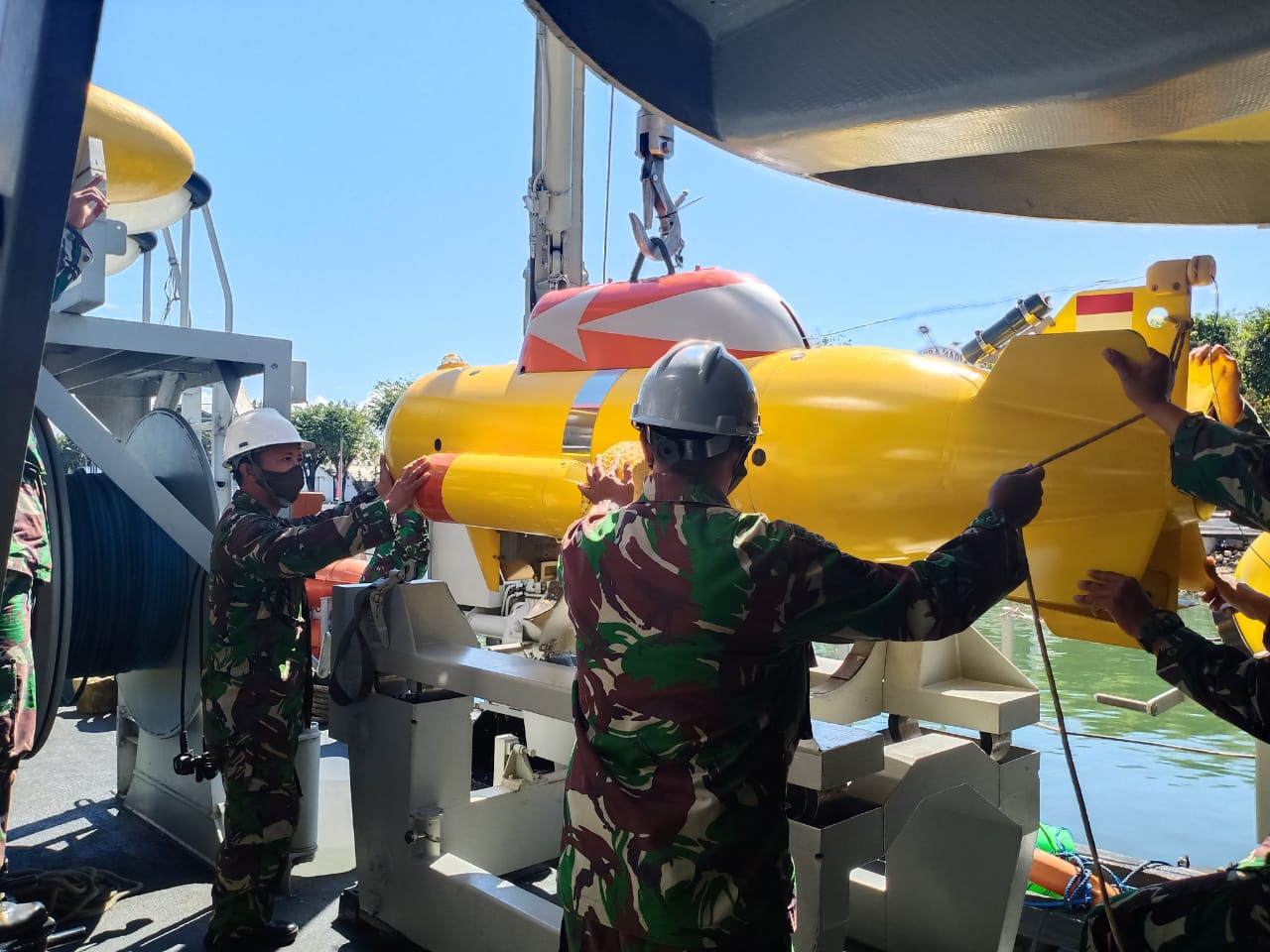
Guna meningkatakan profesionalisme prajurit dalam mengawaki Alat Utama Sistem Senjata (Alutsista), Komandan Satuan Kapal Ranjau Kolonel Laut (P) Cecep Hidayat memerintahkan prajurit KRI Pulau Rupat-712 untuk menggelar latihan serta pemanasan pesawat PAP 104 MK IV kepala Kamera yang dilaksanakan di kolam basin Koarmada II, Selasa (11/8).

Wahana Poisson Auto Propulsion PAP 104 MK IV merupakan kendaraan bawah air yang dimiliki KRI Pulau Rupat (PRP-712), berfungsi untuk mengidentifikasi target atau ranjau yang terdeteksi oleh Sonar TSM 2022. Dalam tahap identifikasi, pesawat ini dilengkapi dengan kamera bawah air.

Kapal Tripartite class ini dilengkapi ROV (Remotely Operated Vehicle) ECA PAP 104 Mk 4 (photos : TNI AL)

Selain berfungsi untuk identifikasi, PAP 104 MK IV juga berfungsi sebagai kendaraan untuk kepentingan netralisasi (Mine Disposal Vehicle). Untuk kepentingan netralisasi, kendaraan ini mampu membawa BOM PAP seberat 126.5 Kg yang selanjutnya akan di release dan didekatkan dengan target sampai dengan kedalaman 300 m.

Pengoperasian PAP 104 MK IV dapat dikontrol dari kapal melalui LCC (Local Control Console) di buritan  maupun MCC (Main Control Console) di CIC. Pengendalian dari jarak jauh dengan menggunakan kabel Coaxial sepanjang maksimal 1000 m.

Dansatran menyampaikan “Pelatihan yang dilaksanakan ini sebagai tindak lanjut dari himbauan Pangkoarmada II Laksda TNI Heru Kusmanto dalam upaya mempertahankan kondisi teknis pesawat, juga untuk meningkatkan profesionalisme prajurit KRI PRP-712 sehingga mampu menjawab semua tuntutan tugas yang diberikan kedepan, khususnya dalam operasi peperangan ranjau”, pungkas Cecep – sapaan akrab Dansatran Koarmada II.

(KoArmada2)