02 April 2024

Naval Group and PT PAL have Signed a Contract with Indonesia for 2 Locally Built Scorpène® Evolved Full LiB Submarines

02 April 2024

Two Scorpene Evolved Full Lithium-Ion Battery will be built in PT PAL shipyard (photos: Naval Group)

On March 28th 2024, Indonesia chose Naval Group and PT PAL to strengthen the capabilities of the Indonesian Navy with two Scorpène® Evolved Full Lithium-Ion battery (LiB) submarines to be built in Indonesia in PT PAL shipyard, through a transfer of technology from Naval Group.

A new step in the strategic partnership with Indonesia
In accordance with the Defence Cooperation Agreement signed between the governments of France and Indonesia in August 2021, the Indonesian authorities have chosen Naval Group and PT PAL for their submarine program. The two companies had joined forces through a Strategic Partnership Agreement (SPA) signed in February 2022.

The contract includes the delivery of two Scorpène® Evolved Full LiB submarines that will be built in Indonesia within PT PAL shipyard, thanks to a proven transfer of know-how and technology from Naval Group, and reusing 100% of PT PAL assets.

“Naval Group is very honoured to be part of this new chapter in the strategic alliance between Indonesia and France. With Scorpène® Evolved Full LiB, Indonesia has chosen a high-performant, sea-proven submarine that will strengthen the country’s maritime sovereignty and support the Indonesian Navy in achieving regional superiority at sea. In addition to the submarines, our strategic partnership with PT PAL will also support the Indonesian defence industry to actively prepare the future of naval warfare in the country. We are pleased to welcome the Indonesian Navy in the Scorpène® family”, Pierre Éric Pommellet, Chairman and CEO of Naval Group.

Dr. Kaharuddin Djenod, President Director of PT PAL said: “This step is a high commitment and trust of the Indonesian government in the capability of local engineers to advancing defence technology, especially submarine technology. The government’s commitment in realizing the independence of the defence industry is also supported by the provision of Government Capital (PMN) to fully support the whole local production of submarine at PT PAL. In the future, Indonesia is expected to be able to master submarine technology.”

Strengthening the Indonesian naval and defence industry
Naval Group and PT PAL have a firm intention of pursuing cooperation not only regarding submarines, but also about building Indonesian sovereignty to the benefit of the Indonesian defence industry.

Thanks to an extensive transfer of know-how and the development of Indonesian industrial specific skills, the management, operation and maintenance of the force will be conducted in Indonesia, by Indonesian actors, ensuring both the autonomy of the country and the creation of thousands of long-term high skills jobs. To this day, Naval Group and PT PAL have already signed various cooperation agreements with Indonesian partners, for the submarine program and beyond.


Scorpène® Evolved, a high-performant attack submarine equipped with a cutting-edge energy system
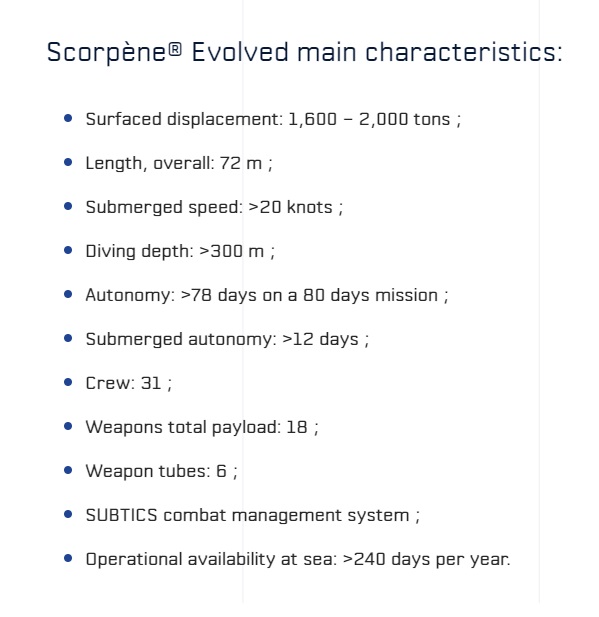
Scorpène® is a modern, high-performant, and stealthy submarine. Robust and enduring, it’s an oceangoing submarine also designed for shallow waters operations. Multipurpose, it fulfils the entire scope of missions such as anti-surface and anti-submarine warfare, special operations, and intelligence gathering. Extremely stealthy and fast, it has a level of operating automation that allows a limited number of crew, which reduces its operating costs significantly. Its combat edge is highlighted by the fact that it has 6 weapon launching tubes, 18 weapons (torpedoes, missiles).

Scorpène® is equipped with the latest generation of combat system, SUBTICS®, which addresses the growing challenges of modern submarines missions in blue and shallow waters in the entire domain of submarine warfare.

The Indonesian Scorpène® submarines will be fitted with a cutting-edge energy system based on a full lithium-ion configuration which encompasses the highest security and safety standards and allows a higher range of useful energy, a better indiscretion rate and a reduced charging time. Thanks to this technology, high speed is available no matter the state of charge, increasing the submarine tactical mobility.

In addition to these two Indonesian Scorpene® submarines, 14 other units designed and adapted by Naval Group for the export market are in operational service or under construction around the world: 2 for the Chilean Navy, 2 for the Malaysian Navy, 4 for the Brazilian Navy and 6 for the Indian Navy. These successes demonstrate both Naval Group's ability to supply best-in-class submarines and to transfer technology successfully.

The final configuration of the submarine is adapted to meet the specific needs of navies and incorporate the latest innovations.
Kopasgat TNI AU dan Pasukan Khusus AS Latihan Penyergapan di Rumpin

02 April 2024

Latihan Sat Bravo 90 bersama SFOD-A (all photos: TNI AU)

Jakarta (ANTARA) - Satuan Bravo 90 Komando Pasukan Gerak Cepat (Kopasgat) TNI Angkatan Udara dan pasukan khusus militer Amerika Serikat Special Forces Operational Detachment Alpha (SFOD-A) mengadakan latihan teknik penyergapan pasukan musuh di daerah pertempuran.

Latihan Bersama (Latma)/Joint Combined Exercise Training (JCET) Arrow Balance Iron 24-123 Tahun 2024 antara Satbravo 90 Kopasgat TNI AU dan SFOD-A itu digelar di Lapangan Tembak Satbravo 90 Kopasgat TNI AU, Rumpin, Bogor, Jawa Barat.

Kepala Dinas Penerangan TNI AU Marsekal Pertama (Marsma) TNI Bambang Juniar Djatmiko saat dihubungi di Jakarta, Minggu, menjelaskan rangkaian latihan berlangsung sejak pekan pertama Maret, yaitu pada tanggal 4 hingga 29 Maret 2024.

Dalam latihan itu, pasukan khusus dari dua negara menguji kemampuan menyergap (ambush) pasukan musuh menggunakan skenario di medan pertempuran.

Beberapa materi yang diuji dalam latihan itu, di antaranya mencakup latihan tactical combat casualty care, very high-frequency communication, machine gun employment, demolition operation, small unit tactic, dan combat marksmanship.

"Latihan bersama antara Satbravo 90 Kopasgat dengan US SFOD-A ini dirancang untuk meningkatkan kerja sama, saling bertukar kemampuan, pengetahuan, taktik, dan teknik pertempuran, serta proses pengambilan keputusan dalam pelaksanaan operasi," demikian siaran resmi Dinas Penerangan TNI AU yang diunggah dalam akun resmi Instagram-nya @militer.udara.

Dalam siaran resmi yang sama, latihan itu melibatkan 50 prajurit dari Satbravo 90 Kopasgat TNI AU dan 10 prajurit dari US SFOD-A.

Komandan Satbravo 90 Kopasgat TNI AU Kolonel Pas A. Dicky Lukman saat acara penutupan latihan, Jumat (29/3), menyampaikan Latma/JCET Arrow Balance Iron 24 merupakan kesempatan yang baik bagi pasukan khusus dari dua negara untuk bertukar pengalaman dan membangun rasa saling pengertian.

Dia berharap latihan serupa dapat digelar rutin ke depannya.

Dalam kesempatan sama, Kolonel Dicky juga berterima kasih kepada seluruh prajurit yang terlibat menyukseskan penyelenggaraan latihan bersama antara pasukan Satbravo 90 Kopasgat TNI AU dan US SFOD-A di Rumpin itu.

(Antara)

KAI Menawarkan Pesawat Tempur Ringan FA50 ke RTAF untuk Kebutuhan 1 Skuadron Pengganti F-16

02 April 2024

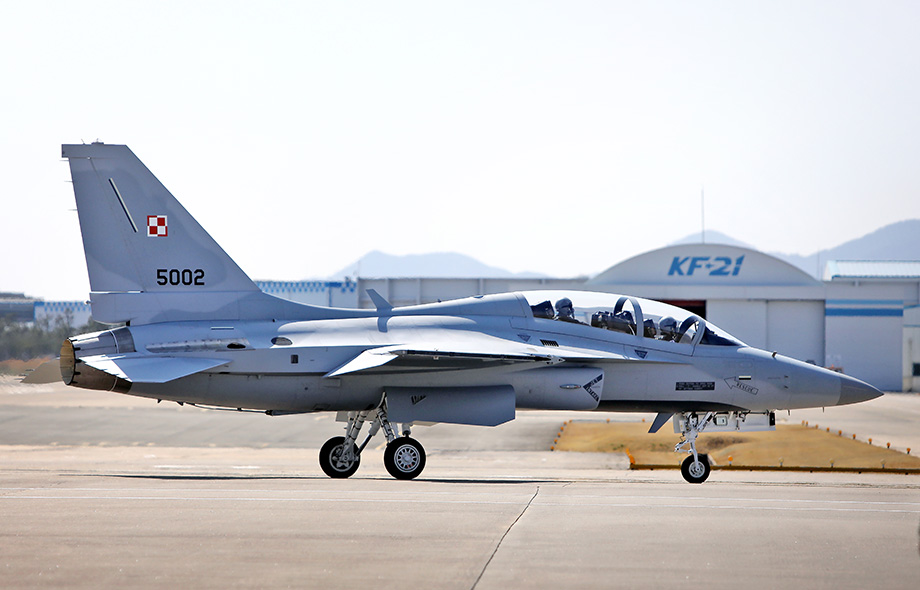
Pesawat tempur ringan FA50 AU Polandia (photo: KAI)

Korea Aerospace Industries (KAI) telah mengajukan proposal kepada Royal Thai Air Force (RTAF), menawarkan untuk menjual pesawat tempur ringan FA50 miliknya. RTAF telah mengalokasikan 19 miliar baht untuk pengadaan jet tempur baru pada tahun fiskal mendatang, seperti diungkapkan orang dalam Kementerian Pertahanan.

Pernyataan tersebut disampaikan oleh CEO KAI, Kang Goo-young, saat kunjungan Menteri Pertahanan Sutin Klungsang ke Korea Selatan, perjalanan yang berakhir pada hari Sabtu. Kementerian Pertahanan Korea Selatan mengundang Sutin, bersama dengan Sekretaris Jenderal Tetap Pertahanan Sanitchanok Sangkhachan, untuk menyaksikan dua jet latih canggih T-50 buatan Korea yang akan dikirim ke RTAF pada bulan Agustus. Delegasi tersebut diangkut ke fasilitas KAI di Sacheon dengan helikopter yang disediakan oleh tuan rumah.

RTAF sebelumnya telah mengakuisisi total delapan jet latih canggih T-50 dan enam pesawat tempur ringan FA50 dari KAI pada tahun 2015. Pesawat-pesawat ini telah dikirim secara bertahap dan ditugaskan di Wing 4 yang berbasis di Nakhon Sawan sejak tahun 2018.

Kang, dalam interaksi media, menyatakan bahwa FA50 adalah pesawat tempur multi-peran yang dapat menyamai kemampuan tempur udara jet tempur F16 buatan AS, namun biayanya hampir setengahnya dan biaya perawatannya lebih rendah. Ia juga menyebutkan bahwa KF-21, pesawat lain yang dikembangkan KAI, hanya berharga US$80 juta (2,9 miliar baht) dengan biaya pemeliharaan US$14.000 per jam penerbangan.

RTAF sedang bersiap untuk mempensiunkan F16 lama dari Skuadron 102 di Wing 1 dan menggantinya dengan 12 jet tempur baru. Untuk pengadaan empat pesawat pertama, 19 miliar baht (US$ 521 juta) telah dialokasikan untuk tahun fiskal 2025, sesuai dengan Buku Putih Angkatan Udara.

Rencana pengadaan jet tersebut kemungkinan akan disampaikan kepada kabinet pada 2 April, seperti yang diinformasikan oleh ACM Punpakdee Pattanakul, komandan angkatan udara, pekan lalu. Angkatan Udara saat ini sedang mempertimbangkan antara pesawat Gripen E/F Swedia dan pesawat F-16 Block 70 milik AS.

Perangkat keras militer
Pekan lalu, Saab AB, yang berbasis di Swedia, menyatakan bahwa proposalnya untuk menjual jet tempur Gripen ke RTAF akan mematuhi kebijakan offset pemerintah dan memenuhi persyaratan lain yang ditetapkan oleh Angkatan Udara untuk pengembangan kemampuan nasional.

Berdasarkan kebijakan offset, negara-negara yang menyediakan perangkat keras militer baru ke Thailand harus membalasnya dengan menawarkan evaluasi ekonomi yang setara dalam perdagangan bilateral. Menurut sumber tersebut, dengan rencana pengeluaran sebesar 19 miliar baht, RTAF dapat memperoleh delapan jet FA50. Jumlah ini, jika digabungkan dengan enam jet FA50 yang sudah dipesan, akan menghasilkan total 14 jet, yang merupakan satu skuadron penuh.

Selama kunjungannya, Sutin berunding dengan rekannya dari Korea Selatan Shin Wonsik, mengenai topik tentang keamanan dan peningkatan kerja sama militer di berbagai bidang seperti pendidikan dan industri pertahanan.

Defence Technology Institute (DTI) dan Defence Industry and Energy Centre diharapkan dapat melanjutkan diskusi mengenai pengembangan industri pertahanan. Kementerian Pertahanan Korea Selatan juga menyatakan minatnya untuk melakukan kerja sama lebih lanjut, termasuk pendirian pabrik di Thailand dan transfer pengetahuan teknis, lapor Bangkok Post.

Sutin dan delegasinya juga bertemu dengan Paul J LaCamera, kepala United Nations Command (UNC), yang menyatakan terima kasih kepada Thailand atas dukungannya terhadap misi PBB dan memuji prajurit Thailand atas komitmen mereka.

Indonesian MoD Delegation Visited DOEN Waterjet Engine Factory in Australia

02 April 2024

Indonesian MoD delegation visited DOEN in Australia (photos: DOEN)

It was a pleasure to host a delegation from the Indonesian Ministry of Defence (MOD) at our factory, showcasing Australia's advanced manufacturing capabilities.

Doen WaterJets is supplying a DJ450B-DT waterjet (impeller dia. 1145mm) to PT Palindo Marine, which is commissioned by the MOD to design and construct the new generation 68m fast attack craft for the Navy (TNI AL).


The equipment, configured as a booster jet will be coupled to MAN Energy Solutions' 20V175D-ML diesel, rated at 4400kW.

The intake tunnel is fabricated from the hull matching steel plates and is tailored to suit the contours at the bottom of the boat, further simplifying welding/integrating it into the hull. And the entire pump assembly, including the impeller casing and the discharge nozzle, is made of stainless steel, underpinning best-in-class durability and sustained performance.

DOEN waterjet engine (image: DOEN)

The DJ450B-DT is Doen’s exclusive Direct Thrust (DT) variant - which is no coincidence as all our waterjet products in service by the TNI-AL are the same type and the Navy is extremely satisfied with the extra level of reliability and simplicity associated with DT waterjets.

The MOD’s delegation successfully concluded the Pre Shipment Inspection (PSI) on DJ450B-DT, which was significantly facilitated/expedited by the fact that:

New generation 68m fast attack craft for TNI AL is being prepared by Palindo Marine (photo: Robe_187)

✅ Doen WaterJets is an #ISO9001 company and has stringent quality assurance procedures in place.

✅ DJ450B-DT is built to the requirements of the Bureau Veritas Group (BV) classification society.

We look forward to continue supporting the MOD and PT Palindo on this exciting build and future projects.

01 April 2024

Ahli: Kemampuan ASW dan ASuW TNI AL Butuh Investasi Besar

01 April 2024

KRI R.E. Martadinata 331 dan KRI I Gusti Ngurah Rai 332, dua fregat TNI AL berteknologi paling canggih saat ini (photo: Koarmada 2)

Jakarta (ANTARA) - Ahli pertahanan Alman Helvas Ali mengatakan bahwa kemampuan peperangan antikapal selam (ASW) dan antikapal permukaan (ASuW) TNI Angkatan Laut membutuhkan investasi yang cukup besar.

Oleh karena itu, Alman menilai butuh kehendak politik (political will) dari pemimpin negeri untuk mewujudkan itu karena sektor pertahanan, termasuk untuk meningkatkan kemampuan peperangan antikapal selam dan antikapal permukaan, belum menjadi prioritas belanja pemerintah setidaknya pada tahun ini.

"Indonesia membutuhkan investasi cukup besar untuk membangun kemampuan ASW dan ASuW," kata Alman saat berbicara dalam acara diskusi terkait dengan kemampuan ASW dan ASuW TNI AL di Jakarta, Selasa.

Investasi itu, kata dia, tidak hanya sebatas untuk membeli alutsista yang dapat menopang kemampuan peperangan antikapal selam dan antikapal permukaan TNI AL, tetapi juga untuk mendukung industri pertahanan dalam negeri agar mereka mampu memproduksi alutsista-alutsista tersebut.

Dalam diskusi yang sama, dia memandang perlu Pemerintah mempertimbangkan untuk membeli lisensi, terutama untuk sistem akustik dan elektronika, daripada membentuk kerja sama alih teknologi (offset) saat membeli alutsista dari luar negeri jika ada komitmen membangun kemampuan ASW dan ASuW TNI AL.

"Peluang yang kita punyai adalah jika ingin membangun kemampuan penuh TNI AL untuk peperangan bawah air, itu harus didukung bagaimana menumbuhkan kapabilitas industri lokal. Untuk mendukungnya, bagaimana industri lokal ini bisa memproduksi underwater acoustic equipment (perangkat akustik bawah air, red.) underwater electronic equipment (perangkat elektronika bawah air, red.)," katanya.

 Alman menyebutkan salah satu cara untuk meningkatkan kemampuan industri pertahanan dalam negeri untuk produksi sistem akustik dan elektronika melalui pembelian lisensi.

"Caranya adalah kita harus mengubah kebijakan offset menjadi lisensi. Dengan lisensi, kita akan mendapatkan gambaran penuh pengetahuan tentang bagaimana memproduksi peralatan akustik. Kalau offset, tidak akan jalan," kata dia.

Alman mencontohkan keuntungan pembelian lisensi itu saat pembuatan kapal patroli cepat FPB 57 oleh galangan kapal PT PAL.

Peralatan deteksi kapal selam helikopter AS 565 MBe Panther TNI AL (photo: istimewa)

"PT PAL bisa bikin FPB 57 pada masa lalu karena waktu itu beli lisensi FPB 57, bukan offset bikin haluan atau buritan FPB 57, melainkan beli lisensi," kata dia.

Jika Pemerintah mendukung industri dalam negeri membeli lisensi, menurut dia, industri pertahanan RI punya akses terhadap sistem alutsista yang ingin dibangun dan dikembangkan ke depan.

"Pertanyaannya apakah kita mau melakukan ini? Karena lisensi biayanya tidak murah. Kita harus membayar sekian ratus juta dolar atau mungkin hampir miliar dolar untuk suatu produk. Kuncinya, kemauan politik," kata dia.

Alman menyebut saat ini Indonesia masih bergantung pada industri pertahanan asing, terutama dari negara-negara Eropa untuk teknologi akustik dan elektronika kapal. Padahal, teknologi tersebut, krusial untuk meningkatkan kemampuan peperangan antikapal selam dan antikapal peperangan TNI AL.

Terkait dengan investasi bidang pertahanan, Sekretaris Direktorat Jenderal Strategi Pertahanan (Sesditjen Strahan) Kementerian Pertahanan RI Brigjen TNI Oktaheroe Ramsi, dalam acara diskusi yang sama, menyampaikan Kemhan pada prinsipnya berharap anggaran pertahanan naik setidaknya sampai 1,5 persen dari PDB.

Namun, upaya meningkatkan anggaran pertahanan sampai 1,5 persen dari PDB pun tak mudah. Pasalnya, selain butuh koordinasi panjang antarinstansi dan pembuat kebijakan, juga masih menunggu arah kebijakan presiden terpilih, yang bakal resmi menjabat setelah pelantikan pada tanggal 20 Oktober 2024.

"Contoh, setelah Oktober ini kebijakan-kebijakan pertahanannya apa dan ini bisa dituangkan dalam kebijakan pertahanan negara," kata dia.

Terkait dengan anggaran pertahanan, Alman pesimis anggaran itu naik sampai 1,5 persen pada tahun 2024, di antaranya karena belanja pertahanan kemungkinan belum jadi prioritas Pemerintah, kemudian ada kebutuhan untuk mengelola keuangan negara agar defisit APBN tidak melampaui 3 persen.

"Saya tidak melihat dalam waktu dekat pemerintahan baru akan menaikkan anggaran pertahanan jadi 1,5 persen, paling 1 persen," kata Alman.

Tidak hanya itu, struktur anggaran pertahanan juga masih terbagi untuk belanja pegawai, belanja barang, dan belanja modal. Pembelian alutsista merupakan bagian dari belanja modal, yang alokasinya kurang dari 30 persen dari anggaran pertahanan dari APBN.

"Sejak Orde Baru sampai sekarang, belanja alutsista kita selalu ditopang oleh pinjaman luar negeri, bukan dari belanja modal APBN tahunan. Belanja modal hanya untuk beli amunisi, spare-parts, kapal-kapal patroli ukuran 30–50 meter pakai anggaran belanja rutin, tetapi untuk major-nya kita masih mengandalkan pinjaman luar negeri," kata Alman.

United States and Australia Collaborate on Integrated Air and Missile Defence Test

01 April 2024

Australian ANZAC Class frigate HMAS Stuart (FFH 153) and USS Jack H. Lucas (DDG 125) wait off the coast of the Pacific Missile Range Facility in Kauai, Hawaii, as they prepare for Flight Test Aegis Weapon System-32 (FTM-32) (photo: MDA)

Australia supported the United States (US) as it undertook a successful missile defence test off the coast of Hawaii. 

Royal Australian Navy and Royal Australian Air Force assets supported the test conducted by the US Missile Defense Agency (MDA) and the US Navy.

An advanced medium range ballistic missile target is launched from the Pacific Missile Range Facility, Kauai, Hawaii, as part of the U.S. Missile Defense Agency’s Flight Test Aegis Weapon System-32 (FTM-32), held on March 28, 2024 in cooperation with the U.S. Navy (photo: MDA)

The US test involved the successful intercept of a medium-range ballistic missile (MRBM) test target.

This was the US MDA’s most complex test to date against a priority threat target and demonstrated the capability of the Aegis Weapon System to detect, track, engage, and intercept an MRBM target in the terminal phase of flight.

During the test, Australia demonstrated its advanced radar capabilities aboard a Navy vessel, HMAS Stuart, while a RAAF E-7 Wedgetail assisted in data collection and communications.

A Standard Missile-6 (SM-6) Dual II with Software Upgrade (SWUP) is launched from the USS Preble (DDG 88) off the coast of the Pacific Missile Range Facility in Kauai, Hawaii as part of Flight Test Aegis Weapon System-32 (FTM-32), held March 28, 2024. During FTM-32, the U.S. Missile Defense Agency, in cooperation with the U.S. Navy, successfully conducted an intercept of an advanced Medium Range Ballistic Missile (photo: MDA)

Quotes attributable to Chief of Joint Operations, Lieutenant General Greg Bilton AO CSC:
“This was a unique opportunity to work closely with the US Missile Defense Agency and US Navy as they tested the Aegis Weapon System’s ability to detect, track and defend against short-to-medium range ballistic missiles, while we simultaneously observed the performance of our own systems.

“It is a great example of our deepening defence engagement with the US and an excellent opportunity to demonstrate the Australian Defence Force’s interoperability with the US Navy.”

A Standard Missile-3 Block IA (SM-3 Blk IA) missile intercepts a short-range ballistic missile target during a joint flight test designated Vigilant Wyvern/Flight Test Aegis Weapon System-48 (photo: DVIDS)

Quotes attributable to US Missile Defense Agency Director Lieutenant General Heath Collins: 
“This successful intercept against an advanced threat-representative target in the final stages of flight demonstrated the power and flexibility of the Aegis Weapons System. 

“The Missile Defense Agency is very grateful and honored to have had Australia participate in this important test and we look forward to working together with all of our allies on future collaborations to detect and maintain deterrence in the Indo-Pacific.”

Closing Ceremony of COPE TIGER 2024 Training at Wing 1, Nakhon Ratchasima Province

01 April 2024

Types of aircraft participated in Cope Tiger 2024 (all photos: RTAF)

Friday, March 29, 2024, Air Chief Marshal Phanpakdee Pattanakul, Commander-in-Chief of the Air Force, along with Major General Kelvin Fan, Commander-in-Chief of the Air Force of the Republic of Singapore, and General Kevin Schneider, Commander-in-Chief of the United States Air Force, Pacific Region. 


Participated in presiding over the closing ceremony of the COPE TIGER 2024 exercise at Wing 1, Nakhon Ratchasima Province. Cope Tiger training (Multi-Lateral Exercise Cope Tiger) can be considered as a mixed aerial exercise which has the largest air power integration in Southeast Asia. Air power is brought in from 3 countries: Thailand, the Republic of Singapore, and the United States joined training.


Training models have been developed to suit the current combat situation, by assuming a virtual situation, both control and command training in combat tactics between different types of fighter aircraft. Air attack training against ground targets that are resisted by ground anti-aircraft unit weapons, tactical intelligence training using unmanned aerial vehicles and the support of various support units.


For the purpose of this training to develop the ability to use mixed aircraft. and increase the skills of training participants Including strategy implementation Especially planning to work together systematically. It also strengthens relations between friendly countries participating in the exercise.


This time, the Cope Tiger 2024 exercise marks its 30th anniversary, with Commander Anon Jarusombat, Deputy Director of the Office of Operations and Training, Department of Air Force Operations. He is the director of the Cope Tiger 2024 Combined Training Directorate, Thai Division.


Colonel Sebastian Chai is the director of Cope Tiger 2024 Joint Exercise Directorate, Republic of Singapore; and Colonel Michael G. McCarthy, Director of Cope Tiger 2024 Joint Exercise Directorate, United States Pacific Region.
 

In this training, in addition to personnel and equipment from the Air Force, There are also personnel from the Army, Navy, and officials from Aeronautical Radio of Thailand Company Limited (AEROTHAI) and the Civil Aviation Authority of Thailand (CAAT), Ministry of Transport Participate in training.


In addition, activities were organized to build good relationships between training participants in all 3 countries and people in the training area, including organizing community relations activities,  including providing medical services by a team of doctors from all 3 countries to examine and treat general diseases, dental examination service, eye examination services, hair cutting services, and medical students from Suranaree University of Technology are also available,  come help in taking patient history, including language translation as well.


There is also a radio-controlled airplane display. Musical performance by the Royal Thai Air Force Band including language and cultural exchange activities between students and training participants from the Singapore Air Force and the United States Air Force Pacific Region, with traditional sports activities. which is a symbol that expresses Thai culture At Ban Krok Duean Ha School, Khok Kruat Subdistrict, Mueang Nakhon Ratchasima District Nakhon Ratchasima Province on March 21, 2024, and Ban Noen Chan School, Dong Marum Subdistrict, Khok Samrong District Lopburi Province on March 26, 2024.


Over the past 30 years, COPE TIGER has proven to be an essential part of strengthening readiness and interoperability among three countries: Thailand, the Republic of Singapore, and the United States in cooperation, trust, and mutual understanding. This adds to strong defense ties and plays an important role in regional peace and security.


Air to Air Refueling (AAR)
To increase the flight operating range to fly longer and farther. Without having to land at an airport, the Cope Tiger exercise is an opportunity to take advantage of the benefits of cross-training with friendly countries.


The Air Force has trained pilots to perform aerial refueling from Airbus A330 MRTT (Multi-Role Tanker Transport) aircraft of the Republic of Singapore Air Force and KC-135 aircraft of the Washington Air National Guard of the United States.


It is training to become familiar and skilled in refueling in the air. which is one feature of a high-performance fighter aircraft To achieve maximum value for the aircraft stationed in the Royal Thai Air Force.