03 November 2020

TAI Assembling Diamond DA40NG Training Aircraft for RTAF

03 November 2020

Assembling of 8 DA40NG Diamond Star training aircraft (photos : AAG)

Thai Aviation Industries (TAI) was assembling Austrian Diamond DA40NG Diamond Star trainer aircraft for 604 Squadron, Wing 6 Don Mueang, Royal Thai Air Force at TAI's Aircraft Maintenance Division, Kamphaengsaen flying training school in 19 October 2020.

Assembling 8 Austrian Diamond DA40NG Diamond Star training aircraft for service in the 604 "Sunny" Airborne Division 6 Don Mueang to replace the type of Pacific Aerospace Corporation (PAC) CT-4A Airtrainer, 604 Squadron with the decommissioning ceremony was held in September 17, 2020  is a transition to primary training aircraft of the Royal Thai Air Force.

The DA40NG is a light training aircraft with one propeller engine. Four seats side-by-side, equipped with Garmin's state-of-the-art avionic system from the United States, despite the delays caused by the Covid-19 outbreak, this acquisition is part of the Purchase and Development policy.

(AAG)

02 November 2020

KRI Tombak-629 Akhiri Misi Operasi Dengan Tembakan Meriam

02 November 2020

KRI Tombak 629 kapal cepat rudal (photos : Koarmada2)

KRI Tombak-629 salah satu unsur jajaran Satuan Kapal Cepat Koarmada II, yang sedang melaksanakan Operasi Indomalphi-20 dibawah kendali operasi Guskamla Koarmada II, melaksanakan latihan penembakan meriam NG-18 di Selat Makassar dalam rangka uji sistem kesenjataan di akhir misi operasi ,Jumat (30/10).

“Penembakan berjalan sukses dan lancar mengenai sasaran, dengan menggunakan mode penembakan remote dari ruang Pusat Informasi Tempur (PIT) KRI,” terang Komandan  KRI Tombak,  Letkol Laut (P) Nurulloh Zemy Prasetyo.


Lebih lanjut Letkol Nurulloh mengungkapkan, bahwa fungsi utama dari meriam NG-18 adalah untuk melumpuhkan rudal yang mengarah ke kapal.

”Dengan memiliki sistem lintasan peluru yang membentuk tabir, rudal akan meledak sebelum mencapai sasarannya. Selain itu meriam ini juga ampuh dan efektif untuk melumpuhkan Fast Inshore Attack Craft (FIAC), atau kapal yang berukuran kecil dengan kecepatan tinggi, karena dengan sistem lintasan peluru yang dimiliki, akan sulit dihindari oleh kapal target untuk menghindar,” jelas Nurulloh.

KRI Tombak 629 (photo : madanish)

Ditempat terpisah,  Komandan Guskamla Koarmada II Laksma TNI Rachmad Jayadi  menyampaikan bahwa latihan penembakan ini dilaksanakan untuk  meningkatkan kemampuan personel dalam rangka kesiap-siagaan Alutsista TNI AL pada tugas operasi, sebagaimana instruksi Panglima Koarmada II Laksda TNI I N.G. Sudihartawan, yang sekaligus wujud dari program prioritas Kasal Laksamana TNI Yudo Margono dalam bidang modernisasi KRI, pesawat udara, dan material tempur menuju kekuatan yang siap dioperasikan.

With KF-X Fighter Jet, S. Korea Eyes Foothold in Global Market

01 November 2020

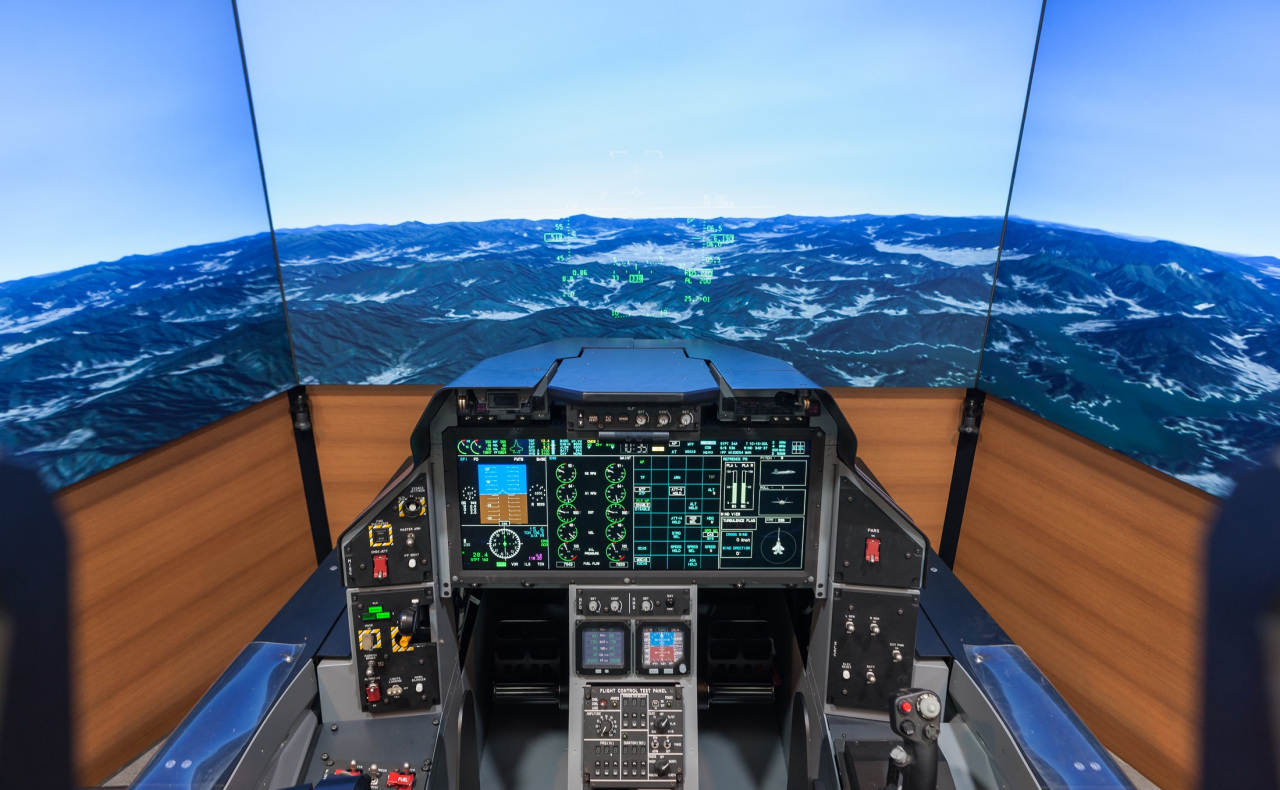
KF-X fighter jet simulator (photo : KAI)

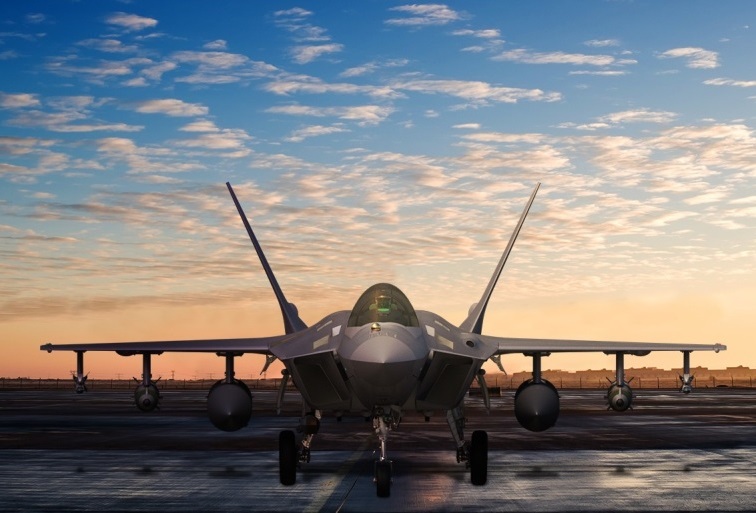
SACHEON, South Gyeongsang Province -- As South Korea gears up to reveal a prototype of its next-generation fighter jet in early 2021, Korea Aerospace Industries is pursuing a broader initiative to carve out its presence in the aerospace market, which is dominated by established players in Europe and the US.

Mass production of the Korean fighter jet, known by the project name KF-X, is expected to begin as early as 2026.

“From 2030 onwards, rival European jets will need replacement due to aging but their production cost is relatively high. America enjoys a price advantage but it doesn’t approve new jet sales to some countries,” Lee Il-woo, chief engineer of the KF-X project, told The Korea Herald in an interview.

And there lies an opportunity for Korea. 

“Our 4.5-generation aircraft is an ‘extreme machine,’” he said, referring to the sophisticated systems and tens of thousands of parts that make up the KF-X aircraft.

Korea plans to replace its retiring third-generation F-4 and F-5 warplanes with the KF-X model to bolster its airpower against other military powers, which mostly operate fourth- or 4.5-generation warplanes.

Fifth-generation fighters are the most advanced aircraft to date, as they are equipped with stealth technology that makes them less visible to enemy radar. But only a few countries, like the US, have made them combat-ready.

Compared with aerospace giants like Boeing and Airbus, the KAI is an underdog with less experience in jet manufacturing. But it has demonstrated remarkable progress in the $16 billion project, despite early skepticism that it was a reckless and risky bet.

“We’ve seen no major disruptions in our timeline for production. That’s something to be very proud of because even top-tier defense companies often deal with delays,” Lee said, adding that the prototype jet to be unveiled next year will undergo one year of ground tests and four years of flight tests.

KFX fighter jet (photo : KAI)

A ground test assesses digitally whether the jet can function under extreme conditions, because those checks cannot be made with an aircraft in flight. A flight test assesses the weapons systems to be installed on the jet.

Test launching of the weapons is set aside for some other time, with their production set to be complete by 2028. 

“We’ve also come up with our own test rig that handles the ground test,” Lee said, adding that building the test rig was a chance to expand the country’s expertise in aerospace technology.

When asked how the KAI was going about localizing the software needed for the jet, the chief engineer said his team had localized key software technologies, including flight and operation control technologies.

Lee went on to say that along with the software development, Korea’s successful localization two months earlier of a key radar technology -- called active electronically scanned array, or AESA -- would prevent the need for outside assistance to maintain the aircraft.

“It costs roughly $1.7 billion to upgrade avionics on 130 or so KF-16s,” Lee said, referring to Korea’s main fighter jets. 

Advanced avionics are important because they reduce the pilot’s workload by presenting integrated information so he or she can make judgment calls more efficiently, Lee explained.  

The chief engineer discussed the shortcomings he faces as well, saying his team still needs a pool of experts familiar with aerospace technologies.

“We have about 1,300 engineers on the project, but they include those with expertise in shipbuilding and not aerospace,” Lee said, maintaining that for the next five years of jet tests, his team would need more veteran aerospace engineers to pinpoint every glitch in jet performance.

Skilled professionals come first in the high-end industries like the aerospace sector, where precision is a top priority. The fact that KAI is in Sacheon, far away from Seoul, doesn’t help in its efforts to attract and retain top-quality talent, he said.

Assembling works of KF-X prototype (photo : KAI)

Yet Lee was optimistic about the prospects for the aerospace industry in Korea. 

“Korea holds a market share of less than 1 percent of the $617 billion global aerospace industry,” Lee said. “Conversely, it means there is ample room for improvement on our part.”

The chief engineer proposed action to start making the aerospace industry Korea’s next chip or shipbuilding industry -- one where it holds world dominance.

“Korea is one of the top 10 countries in defense spending and we continue to localize fighter and training jets. That’s good, but we still import supporting aircraft like transporters,” Lee said. “We should begin localizing those now.”

Lee explained that there could be spillover from the technology gains. They may help Korea boost production of small and midsized civilian aircraft, for instance, and expand the country’s presence there as well.

“The civilian aircraft sector is five times the military (aircraft sector),” Lee said.

“The coronavirus outbreak could restructure the aerospace industry. We need a strategy to seize on the opportunity.”

US Goverment Approved Sale of Javelin Missile to Australia

02 November 2020

Javelin missile of the Australian Army (photo : ADF)

WASHINGTON - The State Department has made a determination approving a possible Foreign Military Sale to the Government of Australia of Javelin missiles and related equipment for an estimated cost of $46 million. The Defense Security Cooperation Agency delivered the required certification notifying Congress of this possible sale today.

The Government of Australia has requested to buy two hundred (200) Javelin FGM-148E missiles with U.S. Government technical assistance and other related elements of logistics and program support. The total estimated cost is not to exceed $46 million.

This proposed sale will support the foreign policy and national security objectives of the United States. Australia is one of our most important allies in the Western Pacific. The strategic location of this political and economic power contributes significantly to ensuring peace and economic stability in the region.

The Australian Defence Force (ADF) is seeking to fill a short-term shortfall in its Javelin missile inventory in order to maintain the appropriate level of readiness. Australia will not have any difficulty absorbing these missiles into its armed forces.

The proposed sale of this equipment and support will not alter the basic military balance in the region.

These missiles will be provided from U.S. Army stocks. There are no known offsets associated with this sale.

Implementation of this proposed sale will not require the assignment of U.S. Government or contractor representatives to Australia.

(DSCA)

Menristek: First Flight Drone Elang Hitam Tertunda karena Pandemi Corona

02 November 2020

Elang Hitam UAV (image : BPPT)

Pandemi virus corona membuat sejumlah riset prioritas yang tengah berjalan harus terhambat. Menristek Bambang Brodjonegoro pun mengakui pihaknya sedang mengantisipasi penundaan pengembangan riset yang tengah dijalani.

Bambang mengungkapkan, salah satu riset yang tertunda adalah adalah drone Elang Hitam yang diperuntukan untuk TNI. Padahal targetnya, drone ini akan menjalani first flight tahun ini.

"Satu contoh yang delay adalah drone Elang Hitam, drone yang kita desain sebagai drone militer pertama Indonesia. Ini targetnya 2020 sudah first flight. Tapi karena anggaran juga ada pemotongan karena realokasi (maka tertunda)," kata Bambang dalam wawancara To The Point dengan kumparan, Selasa (13/10).

Faktor lain yang membuat first flight drone Elang Hitam tertunda adalah pekerjaan pabrik yang dibatasi karena pandemi virus corona.

"Tapi target akhir 2024 kita punya drone yang sesuai kebutuhan TNI dan sistem persenjataan yang modern mudah-mudahan bisa terpenuhi," jelasnya.

Bambang mengatakan, drone Elang Hitam ini sangat penting karena dalam perkembangan militer saat ini, banyak negara yang mulai bergantung pada drone dalam melakukan operasi militer.

Radar pertahanan masuk dalam agenda nasional (image : Len)

Radar pertahanan

Selain itu, Menristek juga tengah mengembangkan pesawat angkut N-219 untuk menghubungkan daerah yang sulit dijangkau di Indonesia.

"Kita kembangkan N2-19 yang sesuai kapasitas 19 penumpang yang bisa menghubungkan daerah yang sulit dijangkau di Indonesia, dan kita akan buat juga versi amfibi dari N-219 ini," tuturnya.

Bambang berharap pesawat angkut ini tidak hanya berguna sebagai pengangkut, tapi bisa juga digunakan untuk pariwisata dan kebutuhan pertahanan lainnya.

"Yang lainnya adalah roket di mana LAPAN sedang menyiapkan terbaru yaitu roket 2 tingkat. Lalu radar pertahanan karena Indonesia negara luas, enggak mungkin jaga secara manual sehingga butuh radar yang canggih," jelasnya.

"Satu hal lagi nuklir, yaitu sistem pemantauan radiasi lingkungan. Itu sekarang sedang mengembangkan alat untuk melakukan pemantauan kalau ada radiasi nuklir," pungkasnya.

01 November 2020

ASC Shipbuilding to Test AML3D’s WAM Technology for Navy Ship Parts

01 November 2020

AML3D’s large-format Arcemy system (photo : AML3D)

ASC Shipbuilding, a subsidiary of BAE Systems Australia was contracted by the Department of Defence to design and build nine Hunter class frigates for the Royal Australian Navy. A commercial Manufacturing Evaluation Program program for additive manufacturing was thus initiated by the maritime manufacturer to test parts manufactured using AML3D’s proprietary WAM process, a type of large format wire arc AM for metals.

“We are pleased to commence this project with ASC Shipbuilding,” said Mr. Andrew Sales, AML3D’s Managing Director: “Having the stringent customer evaluation of AML3D’s proprietary wire additive manufacturing process will not only enhance the exposure of our technology for Marine and Defence applications, but the successful endeavor would lead to a sustainable local shipbuilding industry for future generations.”

In December 2018, ASC Shipbuilding was awarded the contract to design and build the nine Hunter class frigates for the Royal Australian Navy.  To drive innovation, ASC Shipbuilding is focused on unearthing new technologies that maximize the cost-effectiveness of local manufacturing, while minimizing lead-times for ship sustainment within Australia. Through this endeavor, ASC Shipbuilding has identified AML3D’s Wire Additive Manufacturing (WAM) technology as a potential platform that could deliver such efficiencies and will undertake commercial evaluation and testing of WAM.


Under the initial commercial evaluation and validation testing program, AML3D will utilize WAM to produce various geometric parts in a range of metal alloys with the objective to meet BAE’s internal standards for additive manufactured components.

Results of testing will be used by ASC Shipbuilding to determine whether WAM is a suitable manufacturing solution to support the continuous naval shipbuilding and sustainment sovereign capability as laid out in the Australian Government’s Naval Shipbuilding Plan.

AML3D said it is confident that WAM will satisfy the stringent testing protocols for this initial stage evaluation. Given the scale of ASC Shipbuilding’s shipbuilding initiatives, progression to a commercial relationship would be of great significance to AML3D.

(3DPMN)

Eksesais Tiger Leap Uji Tahap Kesiagaan Operasi 10 Briged Para

01 November 2020

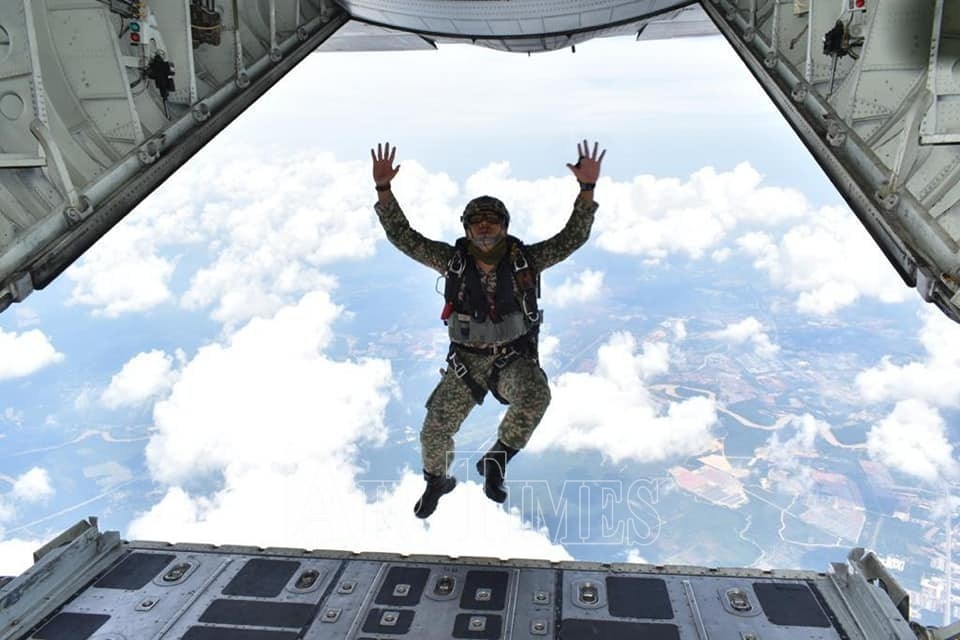
Eksesais Tiger Leap 2020 (photos : AirTimes)

KUANTAN – Seramai 400 anggota Pasukan Atur Cepat (PAC) daripada 10 Briged (Para) telah terlibat dalam latihan penerjunan sempena Eksesais Tiger Leap Siri 3/20 di Pangkalan Udara Kuantan, Pahang, semalam.

Eksesais yang diadakan secara tahunan ini adalah untuk meningkatkan tahap kesiagaan, pengoperasian dan menilai keupayaan elemen PAC.

Selain itu, latihan ini juga adalah untuk meningkatkan keupayaan, kemahiran dan currency anggota PAC dalam penerjunan payung terjun.

“Eksesais ini juga dapat menilai keberkesanan taktik, teknik dan prosedur penerjuanan selain meningkatkan tahap kemahiran kumpulan sokongan di dalam menyediakan bantuan khidmat bagi aturgerak Operasi Udara,” kata Tentera Darat Malaysia (TDM), dalam hantaran di media sosialnya.

Latihan penerjunan ini dilaksanakan bermula dengan latihan pemanasan di mock-up para ground traning di Kem Terendak, Melaka yang melibatkan semua anggota yang berkelayakkan.

Panglima 10 Briged (Para), Brigedier Jeneral Semaon Marjuki, mewakili Panglima Tentera Darat (PTD), Jeneral Tan Sri Datuk Zamrose bin Mohd Zain berkata, sebagai sebuah ketumbukan elit yang diaturgerak dengan cara yang berbeza berbanding dengan formasi Infantri biasa, latihan sebegini adalah amat penting bagi meningkatkan tahap kesiagaan dan pada masa yang sama untuk mengekalkan kompetensi anggota dalam Parachute Operation.


Beliau berkata, latihan khusus sebegini akan terus dilaksanakan dari semasa ke semasa agar tahap kompetensi anggota 10 Briged (Para) sentiasa berada di tahap yang terbaik.

“Pelaksanaan latihan seperti ini sejajar dengan tonggak pertama dalam perintah ulung PTD yang memberi penekanan untuk menambah baik tahap profesionalisme serta profisiensi taktikal dan teknikal melalui keberkesanan latihan individu, kolektif dan joint,”

Menurut TDM, eksesais kali ini turut melibatkan pesawat C130 H dari Tentera Udara Diraja Malaysia.

“300 penerjun telah digugurkan pada paras ketinggian 1,000 kaki menggunakan para door secara twin exit dalam rangkai berteruan untuk anggota penerjun statik,

“Manakala anggota penerjun bebas membuat penerjunan pada ketinggian 10,000 kaki melalui ramp exit,

“Secara keseluruhannya, sejumlah 400 anggota terlibat dengan latihan penerjunan ini dengan pecahan sebanyak 300 penerjun dan bakinya adalah terdiri daripada kumpulan sokongan,” menurut kenyataan itu.