02 Juli 2020
M1A2 Abrams of ADF (photo : Australian Army)
The Australian Department of Defense has announced the start of the search for a supplier of simulators (Immersive Tactical Trainer) for M1A2 Abrams tanks. The request for quotation was published by the Capability Acquisition and Sustainment Group (CASG) within the department.
The acquisition plan for the M1A2 tank simulators is part of the LAND 907 Phase 2 program. Australians are looking for a training system supplier that meets the requirements of Immersive Tactical Training and Procedural Gunnery Training. The devices are to enable the training of tank crews to Army Training Level 6.
Two subsets of simulators will be acquired. One of them will include Immersive Tactical Trainer - Fixed (ITT-F) devices enabling training of four tank crews. ITT-F is to be placed in the building. The second subset of the Immersive Tactical Trainer - Containerised (ITT-C) simulators concerns the delivery of three container sets. Each ITT-C set will have four containers, which will allow the simulation of four tank crews. ITT-C are to be placed in 20-foot ISO containers. Deliveries of simulators are to be made by the first quarter of 2024 for ITT-F and by the third quarter of 2024 for ITT-C.
The purchase of tank simulators will enable Australian Land Forces to reduce training costs while maintaining a high degree of realism and diversification of ongoing training projects.
Australians will acquire M1A2 tank simulators. This variant is currently not included in the armament of Australian ground troops. As part of the LAND 907 Phase 2 program, it is planned to upgrade the 59 M1A1 tanks to the M1A2 variant. M88A2 technical security vehicles will also be modernized to the M88A3 variant. The estimated budget for the implementation of the entire program will be USD 0.75-1 billion. The modernization is to be completed by 2025.
(Altair)
01 Juli 2020
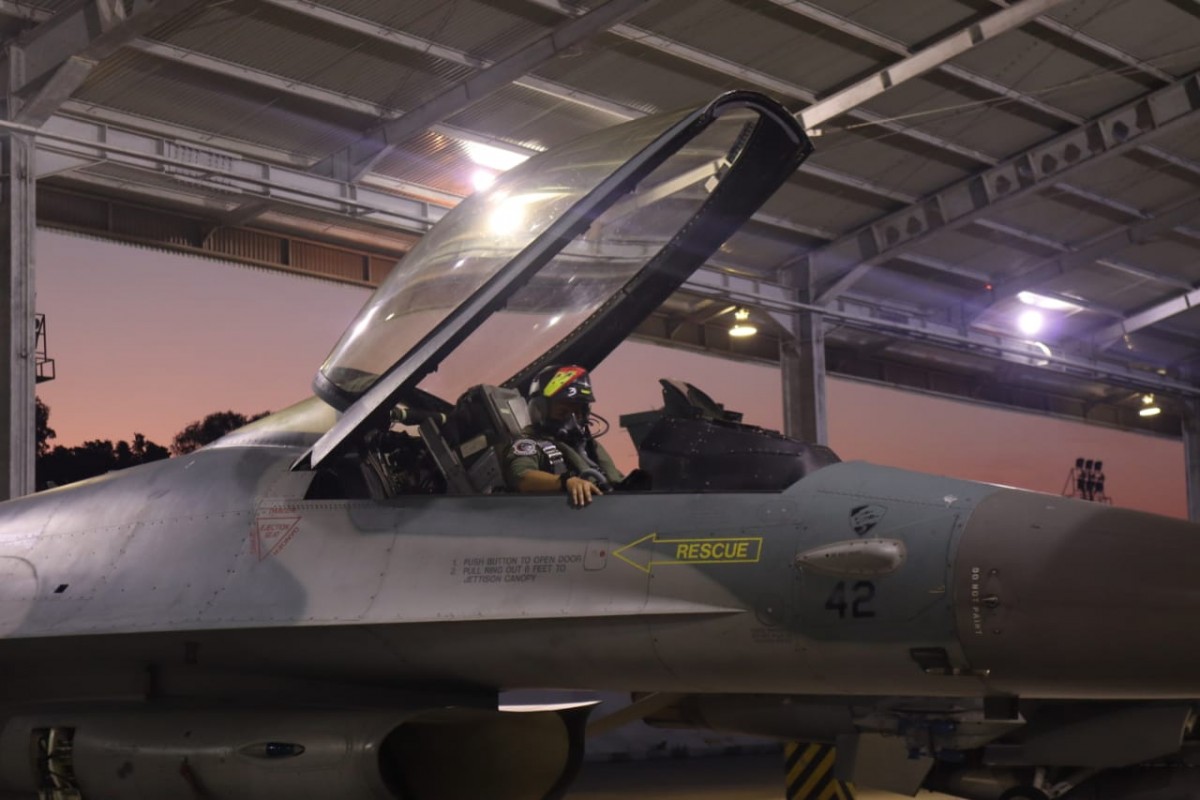
Latihan penembakan udara ke darat pada malam hari (all photos : TNI AU)
TNI AU. Lanud Iswahjudi kembali menggelar latihan guna meningkatkan kemampuan para penerbang tempur di jajarannya. Saat ini, para penerbang tempur Skadron Udara 3 dan Skadron Udara 15 mengikuti latihan penembakan udara ke darat di malam hari atau Night Air to Ground dan latihan Night Vision Goggles (NVG).
Latihan yang direncanakan berlangsung selama satu minggu ini dilaksanakan di Pulung AWR (Air Weapon Range) yang berada di Kabupaten Ponorogo.
Latihan Night Air to Ground bertujuan untuk meningkatkan kemampuan para penerbang dalam melaksanakan penembakan dari udara ke sasaran yang ada di daratan pada malam hari. Pada latihan ini, para penerbang dilatihkan beberapa profile penembakan yang nantinya akan digunakan dalam melaksanakan misi-misi operasi TNI Angkatan Udara.
Sementara latihan NVG bertujuan meningkatkan kemampuan para penerbang dalam menggunakan peralatan Night Vision Goggles (NVG). NVG adalah peralatan yang mampu menangkap thermal imaging yaitu objek yang terlihat memancarkan sinar infra red. NVG dapat membantu para penerbang untuk melihat permukaan (surface) pada saat malam hari, sehingga dapat meningkatkan situational awareness bagi penerbang dalam melaksanakan operasi pada malam hari.
Selain bertujuan meningkatkan kemampuan para penerbang, latihan ini juga melatih ground crew dalam menyiapkan pesawat maupun armament yang akan digunakan untuk latihan Night Air to Ground.
(TNI AU)
01 Juli 2020
Kementerian Pertahanan mengajukan anggaran Rp 129,3 triliun (photo : Chris Cavas)
Menteri Pertahanan Prabowo Subianto mengajukan anggaran sebesar Rp 129,3 triliun pada anggaran tahun 2021 mendatang. Hal itu berdasarkan dokumen Kerangka Ekonomi Makro dan Pokok Kebijakan Fiskal tahun 2021 yang diterima kumparan, Rabu (1/7).
Alokasi anggaran Kemhan yang mencapai Rp 129,3 triliun itu berasal dari dari rupiah murni Rp 113,1 triliun (87,5 persen), pagu penggunaan PNBP Rp 2,1 triliun (1,6 persen), pagu penggunaan BLU Rp 3,1 triliun (2,4 persen), dan SBSN Rp 0,9 triliun (0,7 persen).
Rencananya, dana ratusan triliun itu akan digunakan untuk mendukung pencapaian target prioritas pembangunan nasional bidang pertahanan. Kemhan sendiri sudah menyusun empat program untuk mencapai target prioritas pembangunan nasional bidang pertahanan, termasuk pengadaan alat tempur.
Rincian empat program itu yakni; Program Penggunaan Kekuatan, Program Modernisasi Alutsista dan Non Alutsista dan Sarana dan Prasarana Pertahanan, Program Pembinaan Sumber Daya Pertahanan, dan Program Profesionalisme dan Kesejahteraan Prajurit.
Anggaran Rp 129,3 triliun juga akan digunakan untuk memenuhi sasaran output strategis Kemhan pada tahun 2021 yakni pengadaan alutsista baru. Hanya saja tidak jelaskan secara rinci jenis alutsista yang akan dibeli oleh Kemhan.
Terkait hal ini, tertulis dalam dokumen itu sebagai berikut:
Adapun beberapa sasaran output strategis Kementerian Pertahanan pada tahun 2021 antara lain:
(1) dukungan pengadaan alutsista sebanyak 5 paket;
(2) dukungan pengadaan munisi kaliber kecil sebanyak 1 kegiatan;
(3) dukungan pengadaan/penggantian kendaraan tempur sebanyak 12 unit;
(4) KRI, KAL, Alpung dan Ranpur/Rantis Matra Laut sebanyak 14 unit;
(5) Dukungan pengadaan/penggantian pesawat udara dan lainnya sebanyak 4 unit.
Alokasi rupiah murni juga ditujukan untuk penyelesaian proyek/kegiatan yang ditunda/terhambat akibat adanya pandemi COVID-19 di tahun anggaran 2020.
(Kumparan)
01 Juli 2020
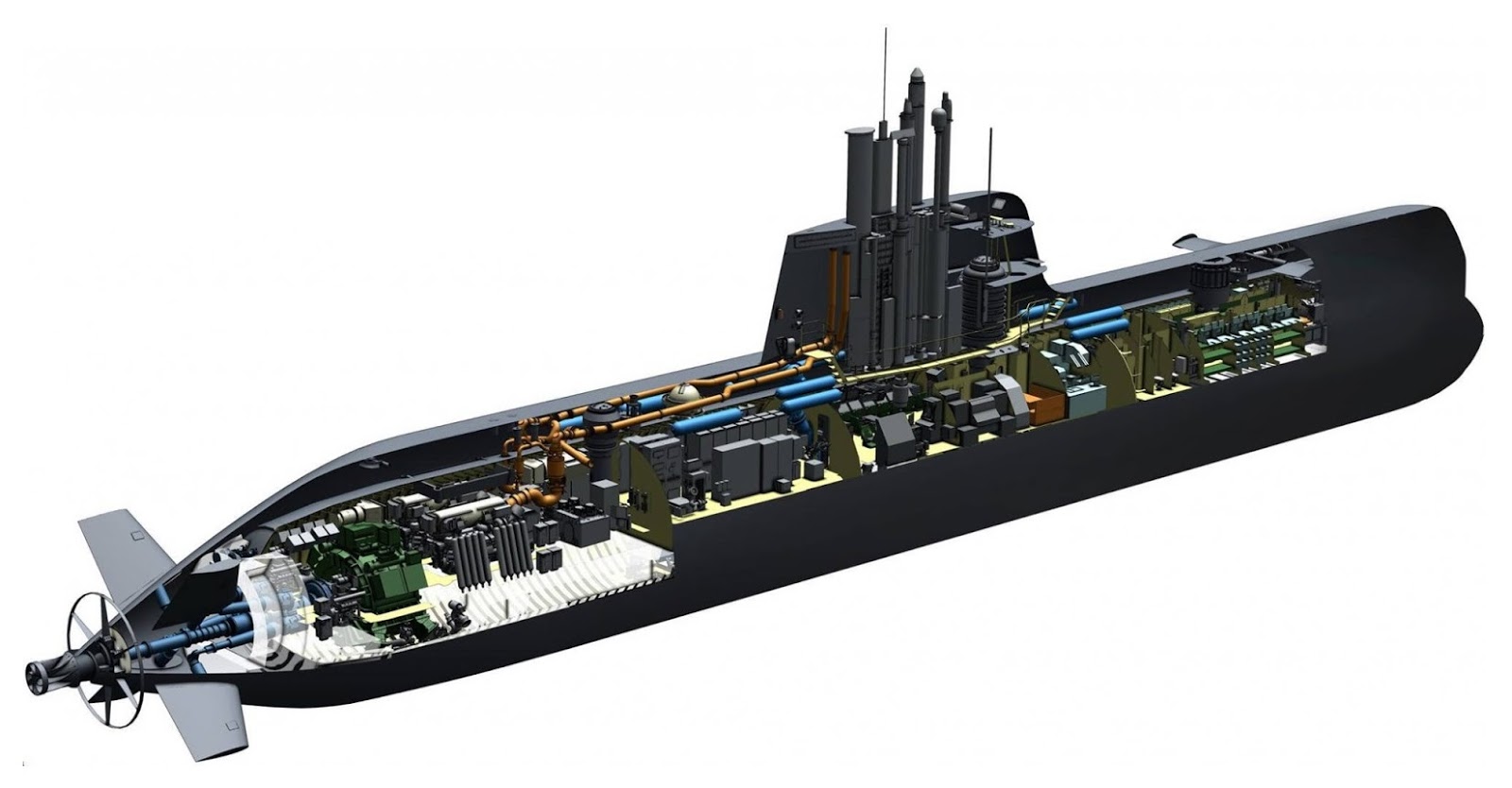
Singapore's Type 218SG (Invincible-class) submarine (image : Sing MoD)
Aster-30 Missile System
The RSAF's Aster-30 missile system will be stood up for 24/7 operations in the coming months. The Aster-30 missile system is a Medium-range Surface-to-Air Missile (MSAM) system capable of engaging and intercepting a wide spectrum of air threats ranging from fighter aircraft to UAVs and precision-guided munitions. It will replace the I-HAWK system and strengthen our Island Air Defence system.
A330 Multi-Role Tanker Transport
The A330 Multi-Role Tanker Transport (MRTT), the RSAF's next generation tanker aircraft, is set to achieve Full Operational Capability in the next few months. Besides providing air-to-air refuelling capabilities, the MRTT can airlift cargo loads and also be equipped with medical equipment for aero-medical evacuation missions.
F-35 Joint Strike Fighter
The Letter of Offer and Acceptance for the acquisition of the F-35 Joint Strike Fighters (JSFs) was signed in March 2020. The four F-35Bs are still expected to be delivered around 2026 and will be deployed in continental US for training and in-depth evaluation. The F-35 JSF will replace the F-16 fighter aircraft, which will be progressively retired post-2030. MINDEF will evaluate the F-35 JSF fully before deciding to commit on a further eight.
H225M Medium Lift Helicopter and CH-47F Heavy Lift Helicopter
Due to supply chain disruptions arising from the COVID-19 pandemic, the H225M Medium Lift Helicopter and the CH-47F Heavy Lift Helicopter will be delivered from early 2021 onwards instead of the previously projected end-2020. The H225M and CH-47F helicopters will replace the existing Super Pumas and older Chinooks which are facing obsolescence. Both helicopters possess better lift and reach capabilities, and will enable the RSAF to meet the SAF's lift requirements more efficiently with fewer helicopters and less manpower.
Invincible-Class Submarines
Due to supply chain disruptions arising from the COVID-19 pandemic, the first Invincible-class submarine is expected to be delivered to Singapore by 2022, instead of the previously projected 2021. The Invincible-class submarines are designed for operations in Singapore's shallow and busy tropical waters. Customised to Singapore's needs, the new submarines possess longer endurance and can carry higher payloads.
Multi-Role Combat Vessel
The replacement of the RSN's Victory-class Missile Corvettes with the Multi-Role Combat Vessels (MRCVs) is proceeding as planned, with six MRCVs expected to be delivered by 2030. The MRCV employs key technologies such as configurable modular payloads and unmanned systems, allowing the vessel to function as a "mothership" for unmanned drones and vessels to conduct a range of missions from peace to war.
Training Projects
Fighter Training Detachment in Guam
The establishment of an RSAF Fighter Training Detachment (FTD) at Andersen Air Force Base in Guam is progressing well with no major delays expected. The FTD, expected to be completed by 2029, will allow the RSAF to conduct larger scale, more complex and realistic training to hone its operational capabilities.
Joint Development of Training Areas and Training Facilities in Queensland, Australia
Major construction for the expanded Shoalwater Bay Training Area (SWBTA), including for key training facilities such as the Combined Arms Air-Land Ranges and the Urban Operations Live-Firing Facilities, is on track to commence later this year. Under the Singapore-Australia Treaty on Military Training and Training Area Development in Australia, both countries will jointly develop military training areas and facilities in an expanded SWBTA and the new Greenvale Training Area (GVTA) in Queensland, Australia. The expanded SWBTA and the GVTA are expected to be completed by 2024 and 2028 respectively.
SAFTI City
Construction of SAFTI City was suspended during the circuit breaker period. This will result in an estimated six to nine months delay, with expected completion of the project pushed to 2024 from the earlier projected 2023. SAFTI City, jointly developed by the Singapore Army and the Defence Science and Technology Agency, will provide a realistic urban environment for soldiers to train for homeland security and urban operations when completed. SAFTI City will also be a smart facility, leveraging smart technologies to enhance training effectiveness and solders' learning experience.
(Sing Mindef)
01 Juli 2020
Philippine Navy seeks to acquire eight fast-attack interdictor craft-missile (FAIC-M) project (photo : MilitaryLeak)
MANILA – The Philippine Navy on Monday said its fast-attack interdictor craft-missile (FAIC-M) project, which seeks to acquire eight ships to replace its medium-sized patrol craft, or the force of patrol killer medium (PKM), will push through amid the coronavirus disease 2019 (Covid-19) pandemic.
Navy public affairs office chief, Lt. Commander Maria Christina Roxas, said the project was approved for inclusion in the Horizon 2 project list of the Revised Armed Forces of the Philippines Modernization Program and has a budget of PHP10 billion.
"FAIC-M is an acquisition project of the PN that was approved for inclusion in the Horizon 2 Projects List of Revised AFP Modernization Program with ABC (approved budget for contract) of PHP10 billion and for Multi-Year Contracting," Roxas said in a message to the Philippine News Agency.
Four of the FAIC-Ms will be armed with non-line-of-sight (NLOS) missiles with pinpoint accuracy with a range of 25 kilometers while the other four will be armed with machine guns and light automatic cannons.
"The MYOA (Multi-Year Obligational Authority) requested is for four years with payment spread by 10 percent, 20 percent, 30 percent, and 40 percent each year starting 2020 and end(ing) 2023. Hence, the 10 percent (PHP1 billion) is already programmed by the DND (Department of National Defense) in the Financial Schedule for FY (Fiscal Year) 2020," Roxas said.
She added that procurement activities will start immediately after the MYOA is approved by the Department of Budget and Management.
Earlier, PN flag-officer-in-command, Vice Admiral Giovanni Carlo Bacordo confirmed that the FAIC-M project is already included in the 2020 budget.
He added that the procurement process would have been on schedule without the Covid-19 pandemic.
Former Navy spokesperson, Capt. Jonathan Zata, said that with the FAIC-M, the PN shall have the capability to defend the key sea lines of communications (SLOCs), such as Mindoro, Balabac, Sibutu and Basilan Straits against conventional threats.
"Operating in restricted waters, the FAIC-Ms can interdict surface threats and launch NLOS missiles safely using the surrounding littoral areas as maneuver space and cover," he added.
Earlier, former PN flag-officer-in-command Vice Admiral Robert Empedrad said the Navy is eyeing to acquire eight Israeli Shipyard Ltd "Shaldag"-class patrol boats to replace the PKMs it is using for maritime interdiction operations.
"These eight 'Shaldags' will replace our PKMs (acquired from South Korea in 1995) which we are now starting to retire. The last PKM we retired was PKM 112 (BRP Bienvenido Salting)," Empedrad said in Filipino.
He added that four of the "Shaldag" patrol boats will be built in Israel while the remaining four will be constructed in the PN Cavite Naval Yard in Sangley Point, Cavite City.
(PNA)
01 Juli 2020
KF-X fighter (image : wellytrade)
South Korea is planning to develop a new supersonic air-to-surface missile (ASM) that is expected to be carried by the Republic of Korea Air Force’s (RoKAF’s) future Korean Fighter eXperimental (KF-X) multirole fighter aircraft.
A Joint Chief of Staff (JCS) official told Janes on 30 June that the weapon is expected to fly at speeds in excess of Mach 2.5, weigh less than 3,000 lb (1.36 tonnes) and have a range of at least 250 km.
No further details were provided about the ASM.
The revelation comes after Janes reported on 28 May that South Korea had recently completed the selection process for the precision-guided munitions and guidance kits it plans to integrate with the KF-X, which is being developed by Korea Aerospace Industries (KAI), with PT Dirgantara Indonesia as KAI’s industry partner on the project.
South Korean military officials told Janes on 28 May that Raytheon’s GBU-12 Paveway II, Boeing’s GBU-31/38 Joint Direct Attack Munition (JDAM), GBU-54/56 Laser JDAM, and GBU-39/B Small Diameter Bomb1 (SDB1), as well as Textron’s Wind Corrected Munitions Dispenser (WCMD) CBU-105 had all been selected for integration with the KF-X.
They said the integration process for the smart bombs and guidance kits, all of which are already in service with the RoKAF, would start later this year, with full integration expected over the coming six to seven years.
The move comes after MBDA Missile Systems announced in November 2019 that it had been awarded a contract for the integration of its Meteor beyond visual range air-to-air missile (BVRAAM) with the KF-X.
Also set for integration is the IRIS-T short-range air-to-air missile (SRAAM) by Germany’s Diehl Defence, with a contract expected to be signed in the near future.
(Jane's)
30 Juni 2020
Lloyd Register to provide assurance and certification services for vessels being built for the Algerian and Thai navies (all photos : AAG)
Lloyd's Register (LR) has been selected to provide assurance and certification services to Hudong-Zhonghua Shipbuilding Group (HZ) for two significant naval projects with the Algerian Naval Force and the Royal Thai Navy.
The Algerian Naval Force project, consisting of a 96-metre Corvette will be designed and constructed to LR's Naval Ship Rules. The Corvette is designed for operations including patrol, escort and protection of maritime interests within the nation's Exclusive Economic Zone. The Corvette incorporates a helipad and a crew of 78 people, has a range of 3,500 nautical miles and is capable of top speeds in excess of 27 knots. It is scheduled for delivery in 2022.
The second project, a 210-metre Landing Platform Dock (LPD) ship for the Royal Thai Navy, can carry up to 800 marines and 20 amphibious vehicles, and has a well-deck that can deploy up to four Landing Craft Air Cushion (LCAC) vehicles - or hovercrafts - of approximately 150 tonnes each. The ship is also fitted with two large hangars that can carry up to four helicopters and a flight deck that can operate two helicopters. The expected delivery date of the LPD ship is 2023.
In addition to its more traditional role in military amphibious operations, the Royal Thai Navy will also use the LPD ship for humanitarian assistance and disaster relief missions. The ship is an export variant of LPDs currently in service with the Chinese People's Liberation Army (PLA) Navy, which are also being built at HZ. LR will provide design and construction certification services to HZ in accordance with LR's Naval Ship Rules.
"Being selected to collaborate on these naval vessels is testament to our longstanding relationship with Hudong-Zhonghua and both navies. We successfully completed work on two 95 m Offshore Patrol Vessels (OPV) for the Thai Navy between 2003-2006 and supported the construction of three 28,000 tonne Corvettes for the Algerian Navy between 2013 and 2016" said LR head of greater China Maogen Xue.
David Lloyd, LR's Global Naval Business Director said: "We are delighted to have been chosen by Hudong-Zhonghua to support them in these two very different projects, demonstrating LR's ability to provide flexible, tailored naval assurance and certification services that support our clients in the best manner possible. This also attests to the strong relationship between the two companies, as well as the mutual desire to expand the considerable experience in naval shipbuilding the partnership will bring to navies around the world."
(Lloyd Register)